Cold Forming Extruders
We Have a Long History of Manufacturing Continuous Cooling and Forming Extruders
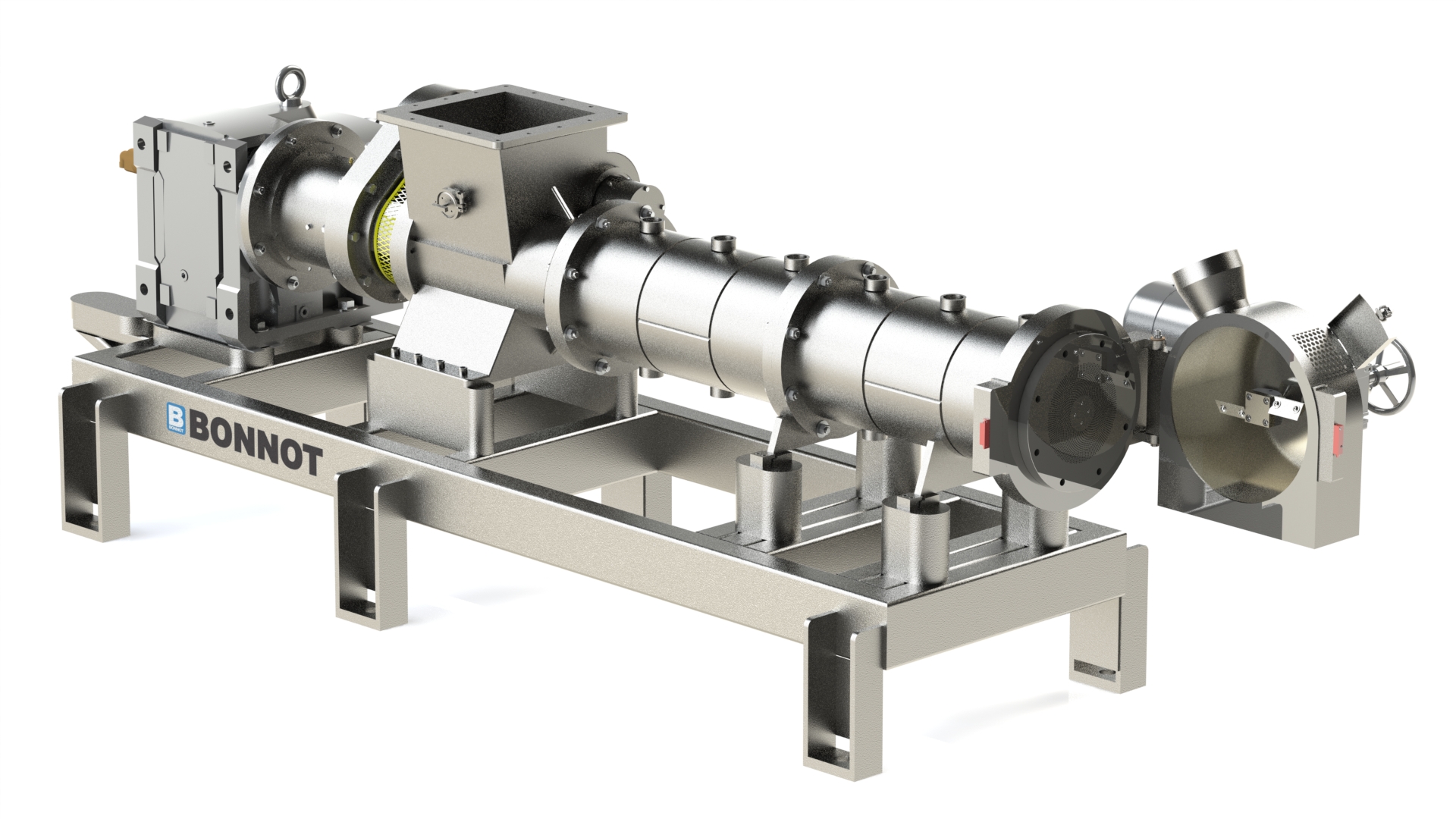
The Bonnot Company offers a line of Cold Formers designed to continuously cool and extrude cooked doughs into pellets or shapes.
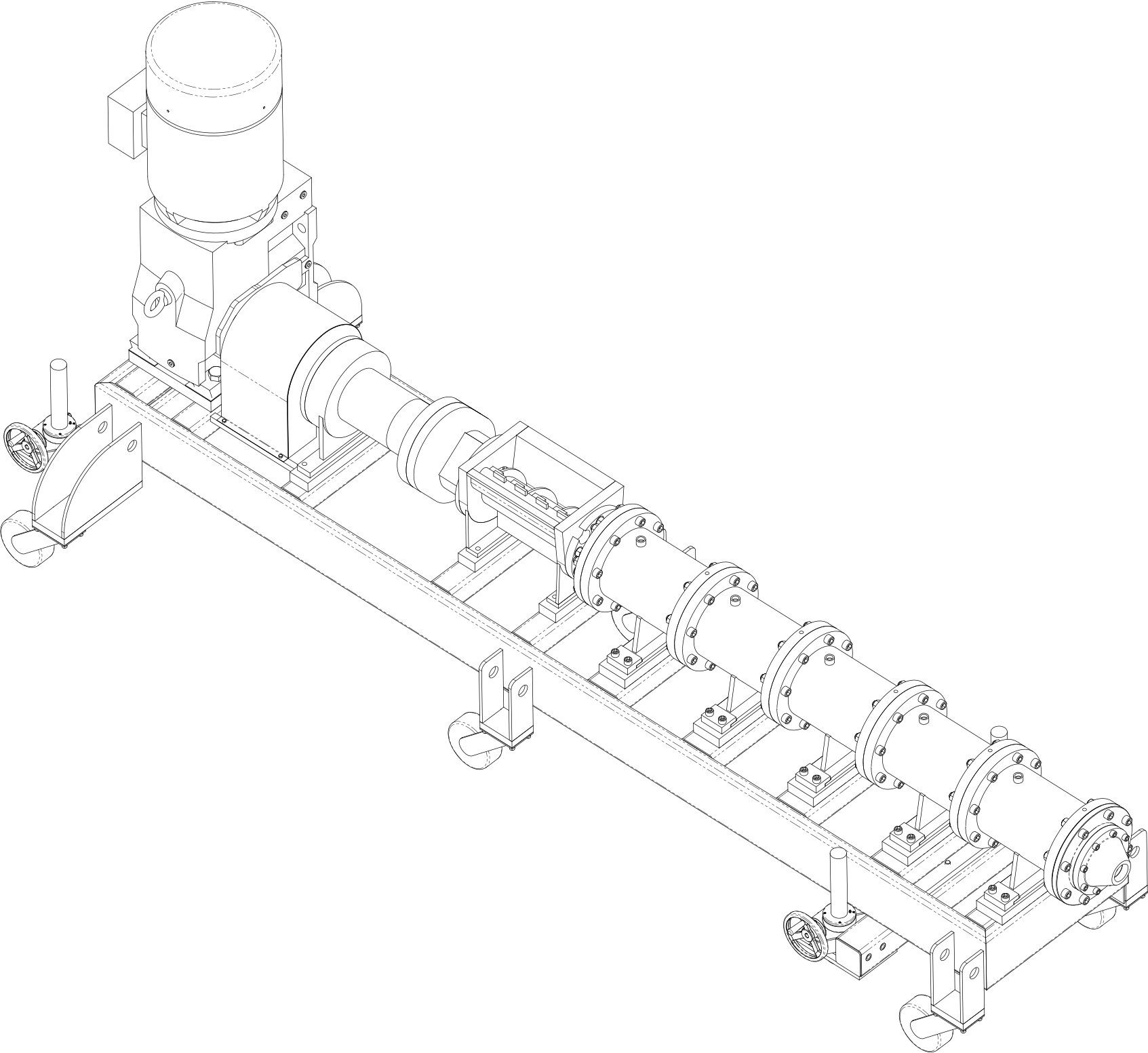
Extruder Design Features
1Designed to maximize thermal transfer
2Multiple cooling zones for process control
3Hollow, shallow flighted screw to supplement barrel jacket cooling
4Customizable dimensions
5Configured for your specific application
6

product information
Bonnot Cold Forming Extruders are the downstream forming stage in a two-step cooking extrusion system, designed to receive hot, cooked product from a cooking extruder and precisely shape it at controlled lower temperatures before the product sets in its final geometry. Available in four frame sizes - 6", 8", 10", and 12" - the CF series scales from moderate to very high throughput to match the output of paired cooking extruder installations, and food-grade stainless steel construction is standard throughout the range. The CF series is in active use at major breakfast cereal, snack, and pet food manufacturers on commercial production lines.
The defining advantage of the two-stage approach over single-pass extrusion is the decoupling of cooking conditions from forming conditions. When a single-pass cooking extruder must simultaneously cook the product and form it, the die temperature is a compromise between the high temperature needed for full starch cook and the lower temperature at which the product has sufficient rigidity to hold a shaped geometry as it exits the die. The Cold Forming Extruder removes this constraint: the cooking extruder operates at its optimal thermal process window without any forming consideration, and the Cold Forming Extruder operates at the optimal forming temperature - typically with chilled or ambient cooling water - giving the product developer independent control of both process variables.
Advantages at a glance
Decoupling cooking and forming into two separate machines allows each unit to operate at its process optimum. The cooking extruder can maintain the high barrel temperatures and elevated moisture levels required for full starch gelatinisation and protein denaturation, while the Cold Forming Extruder receives the cooked mass and firms it to the precise temperature at which the material has sufficient structural integrity to be formed into a defined shape without distortion or collapse at the die face. For products like pillow cereals, filled snacks, and structured pet food chunks, this independent control of cooking and forming conditions is the difference between a product that holds its shape and one that collapses or smears immediately after extrusion.
The CF 10 and CF 12 models handle very high production volumes, matching the output of large-capacity cooking extruders and maintaining throughput parity in two-stage lines without the forming stage becoming the production bottleneck. The progressive frame size increase from CF 6 through CF 12 follows the same mechanical similarity principle that governs the rest of the Bonnot range - process parameters established on the smaller CF 6 development machine translate predictably to the CF 12 production unit without requiring a full re-optimisation of forming temperature, screw speed, or die geometry.
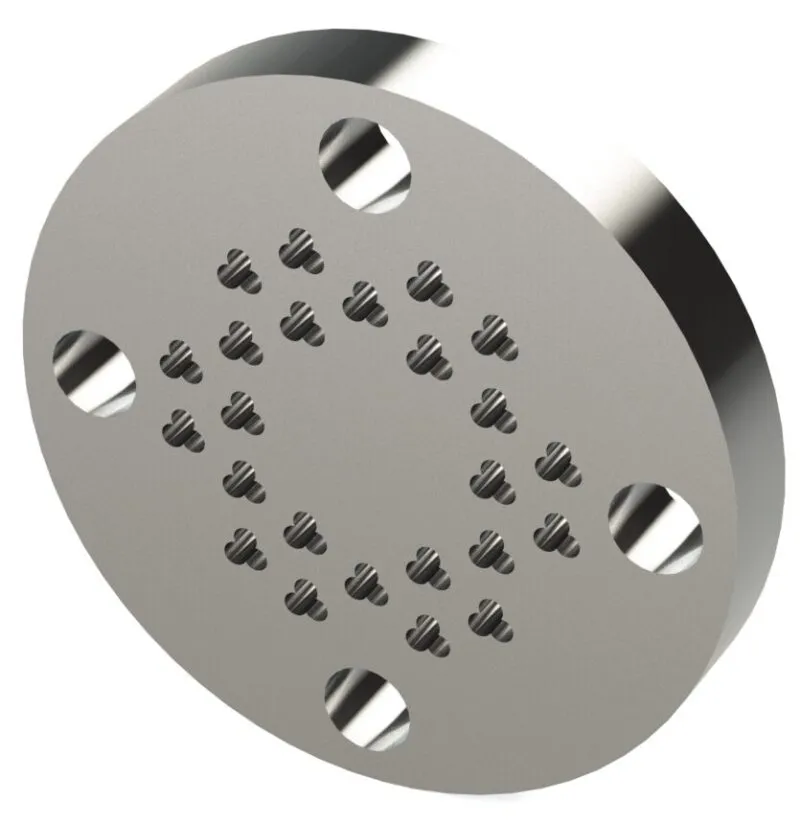
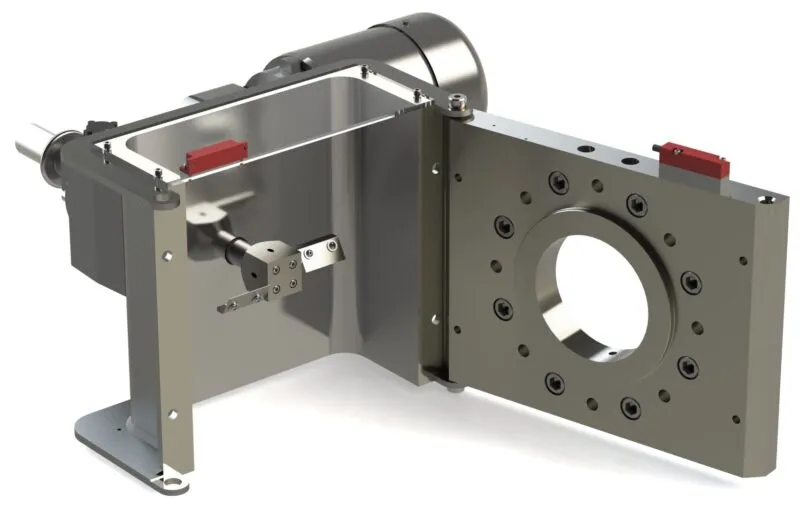
Chilled water or ambient cooling at the die face firms product before it exits, enabling sharper definition on embossed shapes, star cuts, pillow seals, and multi-strand profiles that would distort or flow if formed at the temperatures that cooking extrusion requires. Food-grade stainless steel contact surfaces and quick-release die head arrangements comply with USDA and FDA requirements and support rapid sanitary changeover between product SKUs - a property that is commercially significant on lines producing multiple product variants in a single shift.
Industries and materials served
Ready-to-Eat Breakfast Cereals - Puffed, Flaked, and Shaped
Two-stage cooking and cold forming produces flake intermediates, shaped puffs, pillow cereals, and filled cereal products with precise geometry from corn, wheat, oat, and multi-grain formulations. The cold forming stage is particularly important for filled products, where the forming step must seal the filled pocket at a product temperature low enough to prevent the filling from liquefying and compromising the seal, while the cooking stage must achieve full starch gelatinisation of the shell at a barrel temperature that would destroy the filled product if it were present during cooking.
Snack Pellets, Half-Products, and Direct-Expanded Snacks
Pre-formed snack pellets and half-products are cold-formed after cooking to precise pellet geometry for downstream frying, baking, or puffing. The dimensional consistency of the pellet - diameter, length, wall thickness for hollow shapes - directly controls the uniformity of oil uptake during frying and the expansion ratio during puffing, meaning that the cold forming stage is directly responsible for the texture and appearance consistency of the finished snack product.
Pet Food - Shaped Kibble, Treats, and Functional Formats
Shaped kibble, treat biscuits, bone-shaped chews, and functional formats for companion animal nutrition are cold-formed at controlled temperatures to achieve precise bite-size geometry and controlled bulk density. Leading pet food manufacturers use Bonnot CF equipment in commercial production because the two-stage approach allows them to produce consistent shaped pieces at the high throughputs required by commercial pet food lines without the shape distortion that single-pass extrusion at cooking temperatures typically produces.
Meat Analogues and Plant-Based Protein Products
Formed plant-based meat products - nugget pre-forms, patty shapes, and strip intermediates - require the firm, cool product state that the cold forming stage provides after high-moisture extrusion cooking of textured vegetable protein and pea protein. The forming temperature at the cold forming die face is specifically what determines whether the fibrous microstructure created during high-moisture cooking extrusion is preserved in the formed product or destroyed by the deformation required to fill the die cavity.
Aquafeed, Sinking Pellets, and Semi-Floating Diets
Precisely shaped sinking and semi-floating pellets for fish and crustacean feeds are formed at controlled temperatures to ensure dimensional consistency and water stability before drying. The ability to independently control pellet density through the cold forming stage - by varying the die geometry and product temperature independently of the cooking conditions - allows aquafeed nutritionists to specify the exact sinking rate required for a target species without reformulating the nutritional composition.
Specifications
Extruder Standard Specifications
CF 6 Series
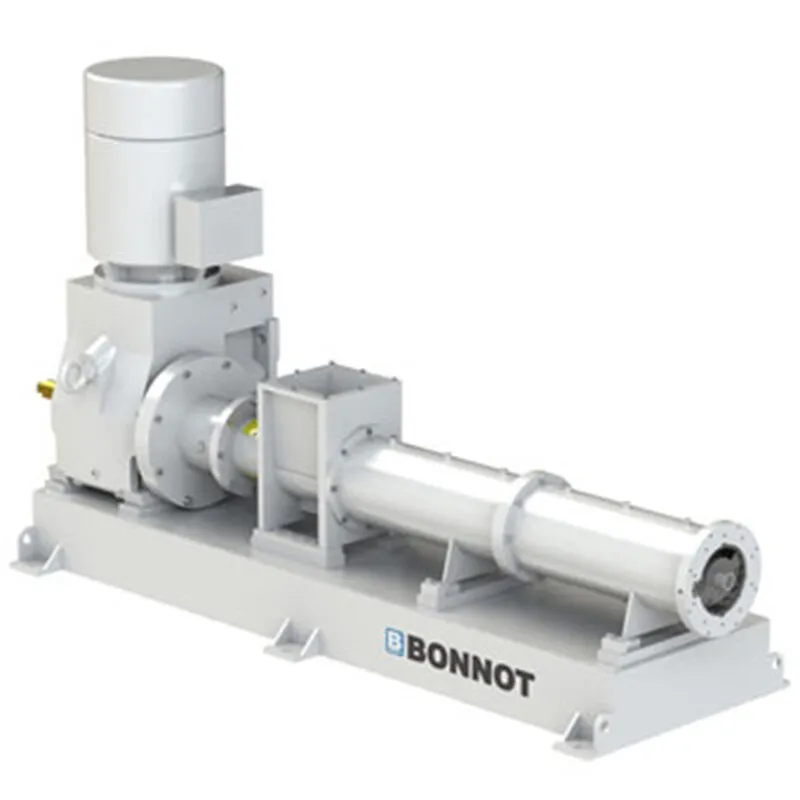
- Output (lbs/hour)
- 500 - 2,000
- Approximate Layout (L x H x W)
- 96" x 36" x 36"
- Approximate Weight (lbs)
- 3200
- Motor (HP)
- 25
- L/D
- 10/1
- Contact Components
- Food grade stainless steel
Many Food Products Can be Extruded
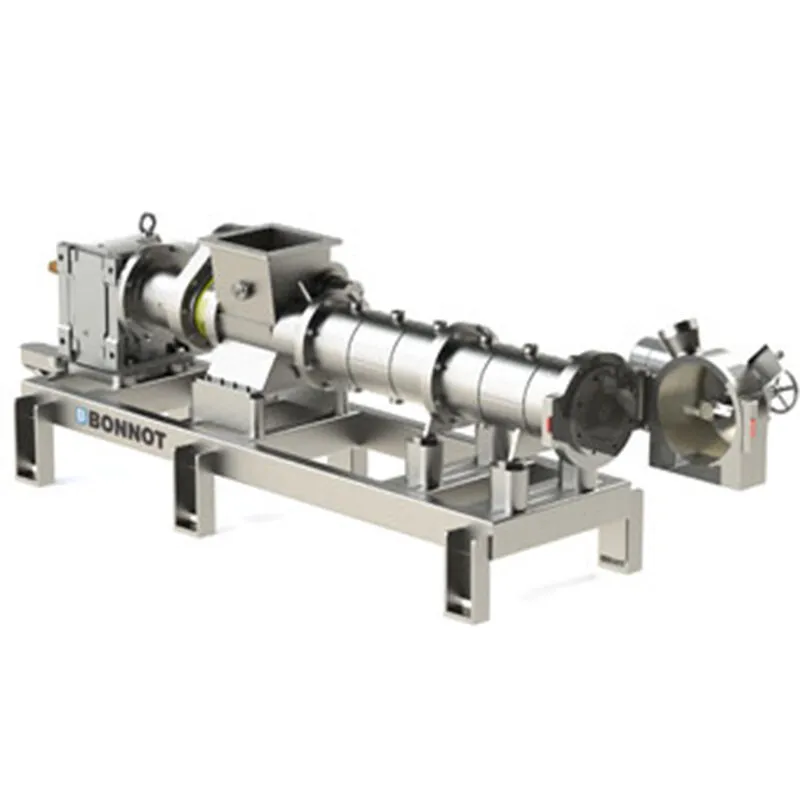
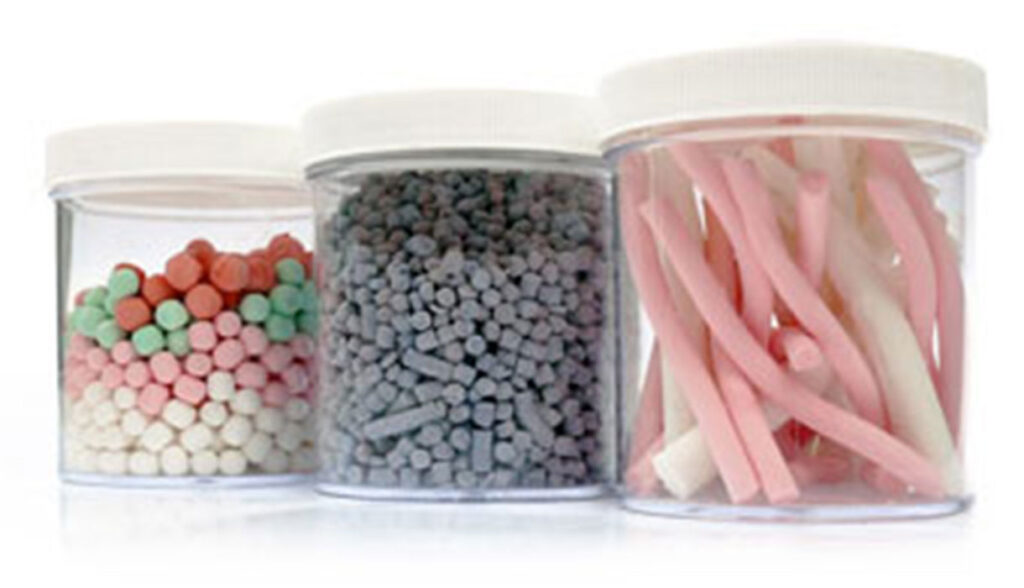
The Bonnot Cold Former is used in a number of major food manufacturing facilities to create uniform densities and shapes.
Pelletizing Dough
The cold former gently lowers temperature in cooked products to enable formation and cutting.
Want to prove it out?
The Bonnot Company is pleased to offer FREE feasibility testing in our test facility. Come and take advantage of our comprehensive catalog of test equipment; different extruder designs, screw geometries, forming dies, temperature control options, mixers and material testing equipment.
Get in touch with us