Laboratory Extruders
The Bonnot Company offers a range of CE compliant lab extruders for application in test laboratories, universities and research and development departments.
The Bonnot Company offers a range of CE compliant lab extruders for application in test laboratories, universities and research and development departments.
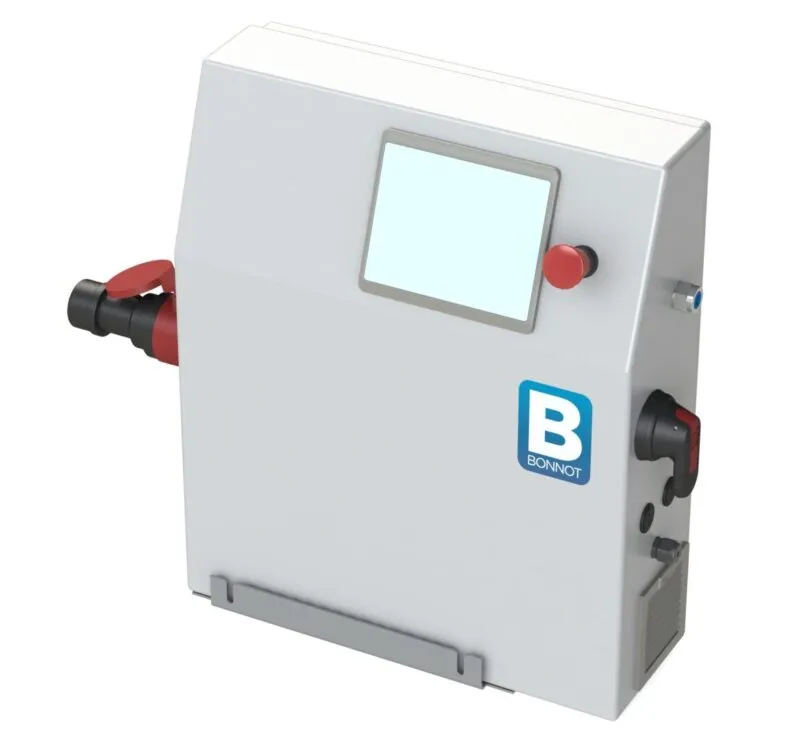
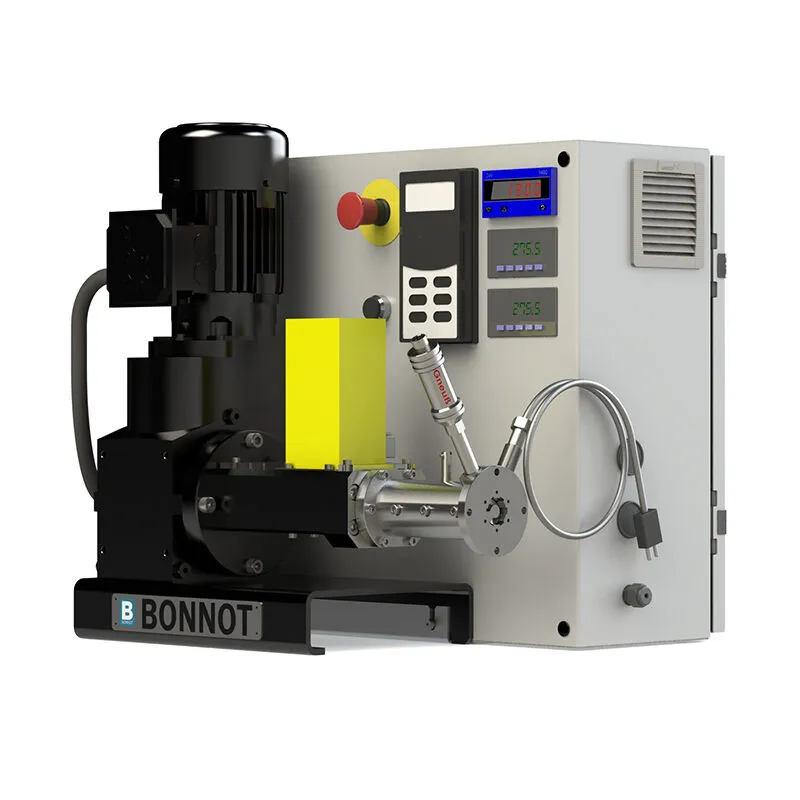
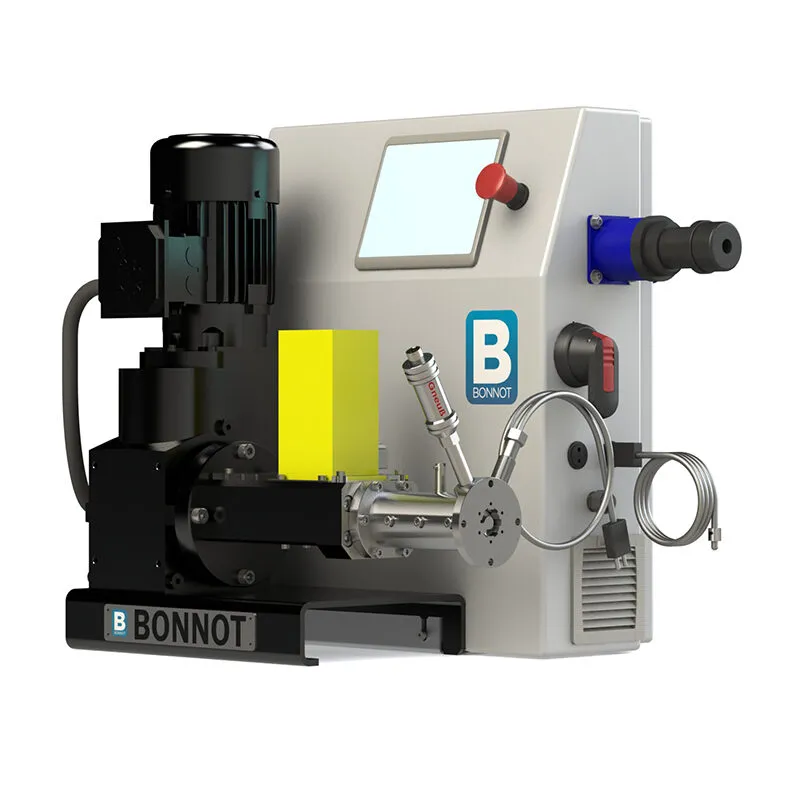
Recently redesigned, they deploy our twin packer technology for positive material ingestion. They can be configured with temperature process control, pressure monitoring, touchscreen & data collection.
Available in different configurations including longer L/D, screw geometry & forming dies.
- 1 Series Output: 5lbs – 15lbs/hour
- 2 Series Output: 50lbs – 150lbs/hour
- Contact Components: Stainless Steel

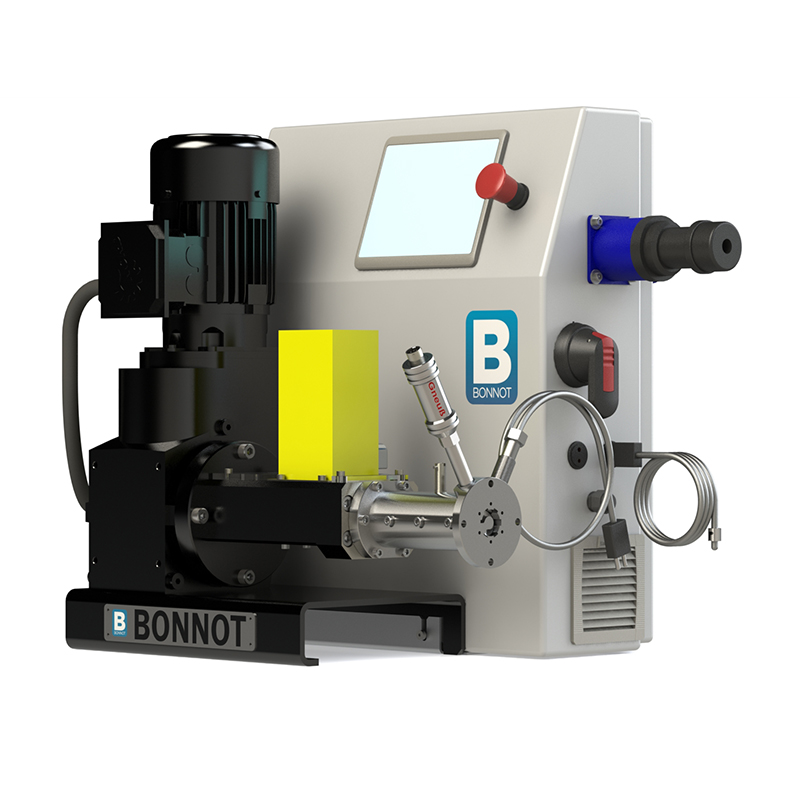
Extruder Design Features
1Touchscreen HDMI
2High Torque Gear Motor
3Temperature & Pressure Probes
4Twin Packers to aid material ingestion
5Quick Release Disconnect
PRODUCT INFORMATION
Bonnot Laboratory Extruders are CE-compliant, bench-scale single-screw machines designed for R&D formulation work, pilot trials, and quality-control testing across the full range of extrudable materials. The 1 Series offers four configurations – NP (no packer), TP (twin packer), TP DX (twin packer with discrete controls), and TP TX (twin packer with touchscreen HMI, temperature & pressure monitoring) – covering development quantities from small feasibility trials through to pre-production validation runs. The 2 Series TP adds a larger-frame twin packer configuration for trials that need to bridge the gap between bench scale and early production. Quick-release disconnect tooling allows die changes and screw pulls in minutes, minimising material waste and operator time between formulation runs.
What differentiates the Bonnot laboratory extruder from competing bench-scale machines is the direct mechanical continuity with the full production range. The same screw geometry, barrel construction, and temperature zone design used in the 1″ laboratory machine is replicated through the 8″ production series, which means that compression ratios, L/D ratios, and temperature profiles developed on the laboratory machine translate directly to production scale without re-optimisation. This scale-up predictability is the primary commercial argument for the Bonnot lab machine: the cost and time associated with re-qualifying a process on an architecturally different production machine can exceed the cost of the laboratory programme itself.
ADVANTAGES AT A GLANCE
-
01
Reliable Scale-Up from Lab to Production
The mechanical similarity between the 1 Series laboratory extruder and the 8" production machine means that a formulation developer can use the laboratory machine with confidence that a screw geometry or barrel temperature profile that works at laboratory scale will produce a similar result at production scale. This is in contrast to laboratory extruders that use simplified or geometrically dissimilar screw designs, where scale-up requires empirical re-optimisation at each intermediate machine size — a process that typically adds weeks or months to the product development timeline. Suppliers of lab extruders oftentimes do not offer larger scale production.
-
02
CE Marking for Multi-Site Deployment
CE marking facilitates deployment in EU research facilities, academic institutions, and international manufacturing sites without additional regulatory certification effort — a practical consideration for multinational companies that need to qualify new formulations in multiple geographic locations using equipment that is already approved for use in each jurisdiction.
-
03
Four Configurations Matched to Trial Material
Four 1 Series configurations — NP, TP, TP DX, and TP TX — allow the feed and barrel configuration to be matched precisely to the trial material: the NP serves free-flowing granules and powders, the TP handles viscous or bridging materials, the TP DX adds a discrete control panel, and the TP TX adds a touchscreen HMI with data collection, temperature and pressure monitoring for scientific trials. The 2 Series TP extends this capability to a larger frame size for trials where the 1 Series throughput is insufficient for downstream testing requirements or the batch size is larger.
INDUSTRIES AND MATERIALS SERVED
Ready to move from lab-scale to production? See Bonnot’s full range of custom and standard extruders.
-
What You Can Trial - Chemical and Catalyst Development
Development of new catalyst body geometries, pore structures, and binder formulations for alumina, silica, and zeolite-based catalysts is one of the more demanding laboratory extrusion applications, requiring precise control of paste rheology, die geometry, and drying conditions before committing to production tooling. The Bonnot laboratory extruder's direct mechanical similarity to the CT production series means that a binder formulation and die geometry combination that achieves target crush strength and pore volume on the 1" laboratory machine will produce comparable results on the CT 6 or CT 8 production extruder without re-development.
-
What You Can Trial - Food, Pet Food, and Nutraceuticals
Formulation of new snack, cereal, pet food, and functional food products on the laboratory extruder follows a direct scale-up path to the CO and FF production series. The consistent scale-up path eliminates the reformulation cycles that commonly arise when pilot and production machines are architecturally dissimilar - a problem that is particularly acute in cooking extrusion, where the texture and appearance of the final product depend on the precise relationship between screw speed, barrel temperature, and die back-pressure, all of which change when the machine geometry changes.
-
What You Can Trial - Rubber and Sealant Compounds
Compound development for new rubber profiles, sealant bases, and adhesive formulations on the laboratory extruder benefits directly from the quick-release die system, which allows trial of multiple die geometries and barrel configurations in a single session. A formulation programme that requires testing fifteen die geometries can be completed on the Bonnot laboratory extruder in a single extended session rather than requiring a dedicated extruder run for each variant.
-
What You Can Trial - Specialty and Advanced Materials
Advanced composite materials, engineered functional pastes, and specialty materials for emerging applications - where batch sizes are small, process window accuracy is critical, and prior extrusion art is limited - are well-suited to development on the Bonnot laboratory range.
-
What You Can Trial - Clay, Ceramics, and Technical Oxides
New ceramic body formulations, technical oxide pastes, and advanced ceramic precursors can be evaluated on the laboratory extruder with confidence that the rheological behaviour, extrudate geometry, and green-density measurements obtained at laboratory scale will transfer to the production series without re-qualification. This is particularly valuable in technical ceramic development, where the cost of production-scale die tooling means that a formulation must be well-characterised at laboratory scale before the capital commitment to production tooling is made.
Available in different configurations
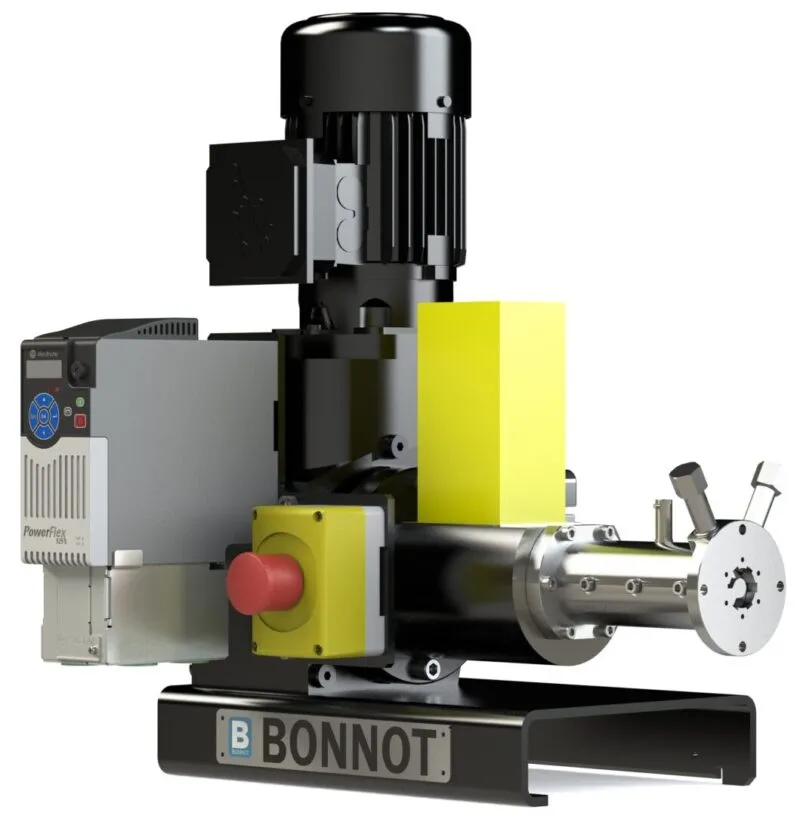
1 Series NP
- Mechanical Feed Aid
- None
- Jacketed Barrel
- None
- Temperature & Pressure Display
- No
- Control Panel
- No
- Data Collection
- No
- Layout
- 14" x 9" x 21"
- Hopper Opening
- 3" x 2.4"
- Motor Power
- 0.5 HP - 1 HP
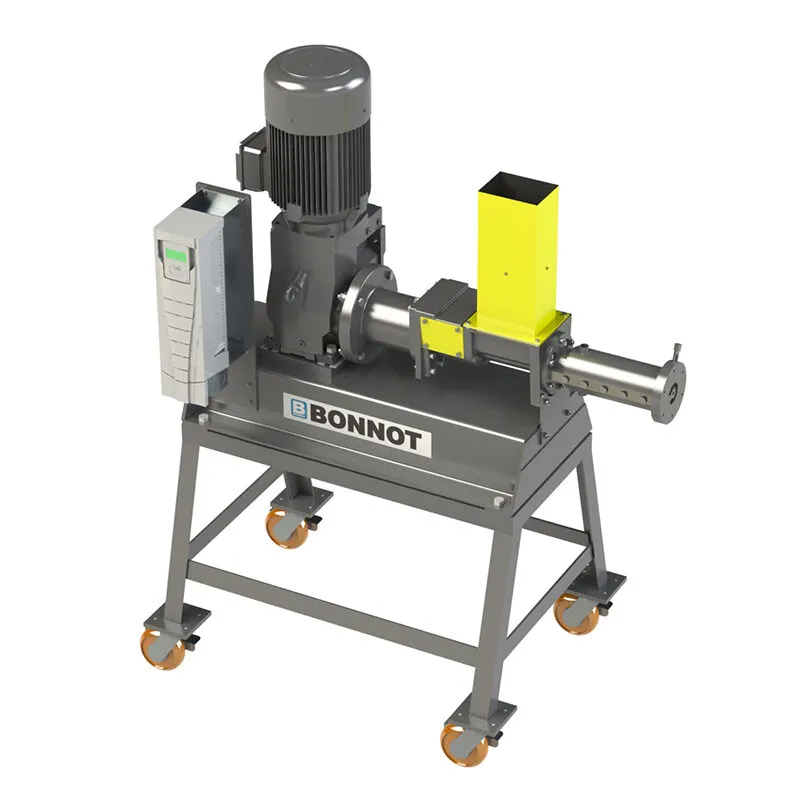
2 Series Extruder
Our 2″ Extruders are used in research and development, as well as pilot scale and production. A highly versatile design, can handle smaller batch sizes and create a variety of profiles.
1 Series Extruder & Cutter
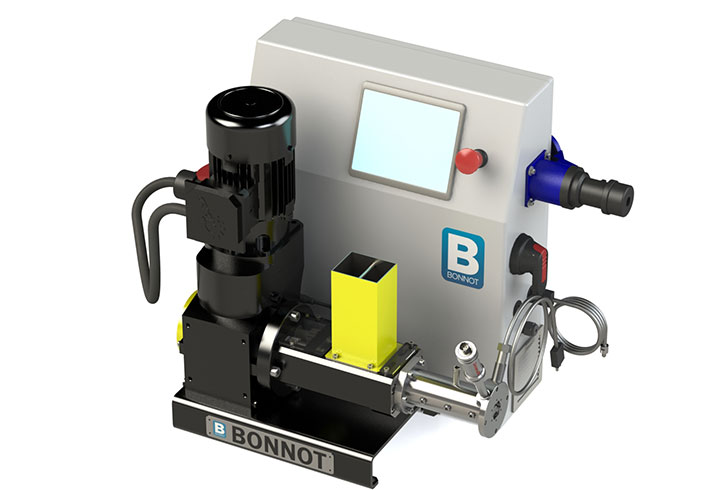
Our full featured bench top lab extruder is designed with a touchscreen PLC, temperature & pressure monitoring with optional rotary die face cutter.
FREE FEASIBILITY TESTING
WANT TO PROVE IT OUT?
The Bonnot test facility offers free feasibility trials across the full 1 and 2 Series — different feed configurations, control options, and full material testing.
-
VIEW LAB CONFIGURATIONS
EARLY RESEARCH
EXPLORE LAB CONFIGURATIONS
EXPLORE LAB CONFIGURATIONS Body: Not sure which configuration fits your development program? We'll help you choose between NP, TP, TP DX, and TP TX.
-
SCHEDULE A CONSULTATION
TECHNICAL EVALUATION
BOOK A TECHNICAL CONSULTATION
Discuss trial scope, feed configuration, and scale-up path directly with a Bonnot process engineer.
-
READY TO TRIAL
BOOK A FREE TRIAL RUN
Bring your material to our lab. We'll run a development trial, measure key parameters, and send you samples.