-
Clay and Ceramic Body Preparation
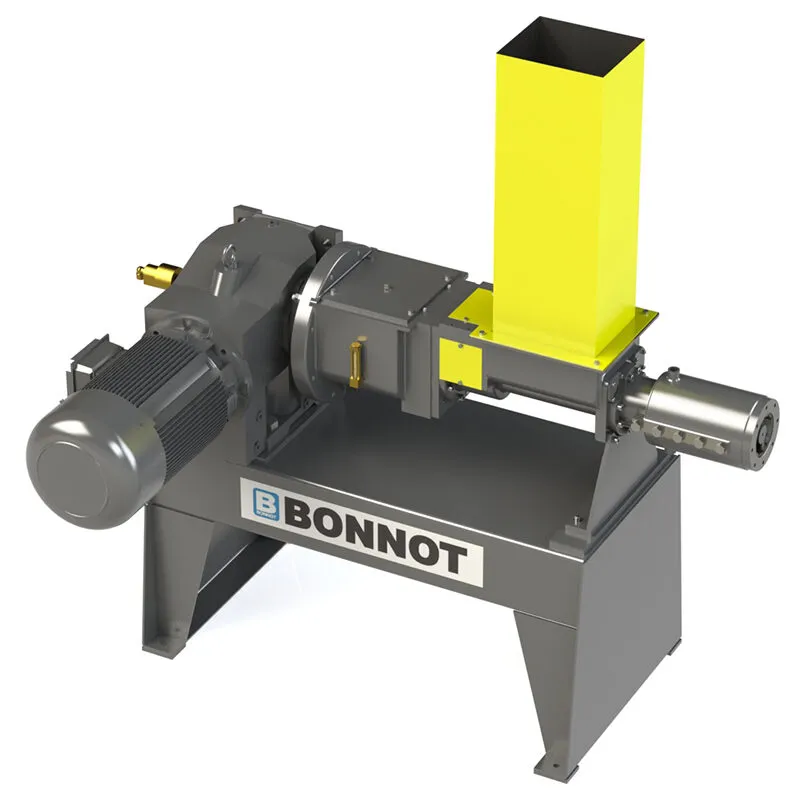
Bonnot pugmill mixers blend and de-air clay and ceramic bodies, delivering the homogeneous, workable material consistency required for reliable extrusion or forming downstream.
-
Catalyst and Adsorbent Paste Preparation
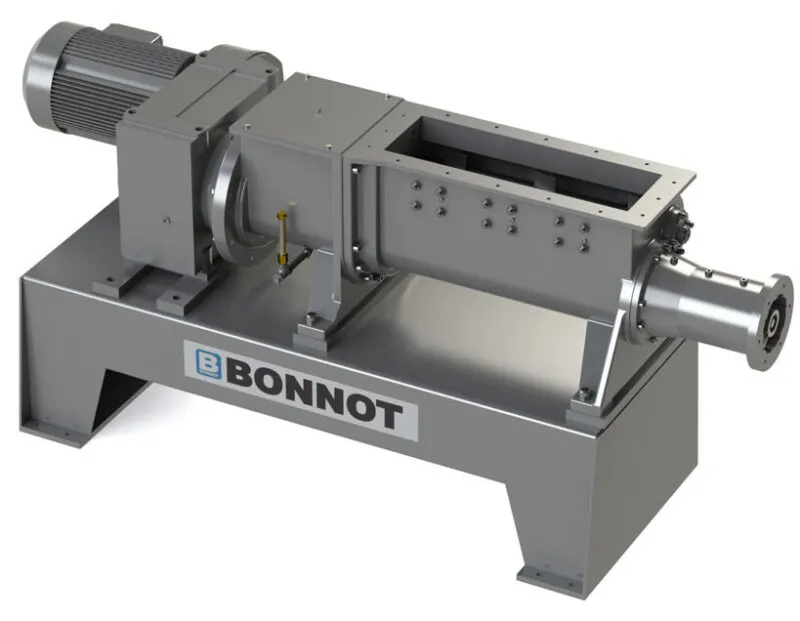
Pugmill mixers prepare catalyst and adsorbent pastes to the uniform consistency needed for consistent extrusion into pellets, rings, or other catalyst shapes.
Home »
Pugmill Mixers
Bonnot Pugmill Mixers Have Been Deployed for Over 100 Years
The Bonnot Company has manufactured Pugmills for over 100 years. We offer several designs and sizes depending on your need.
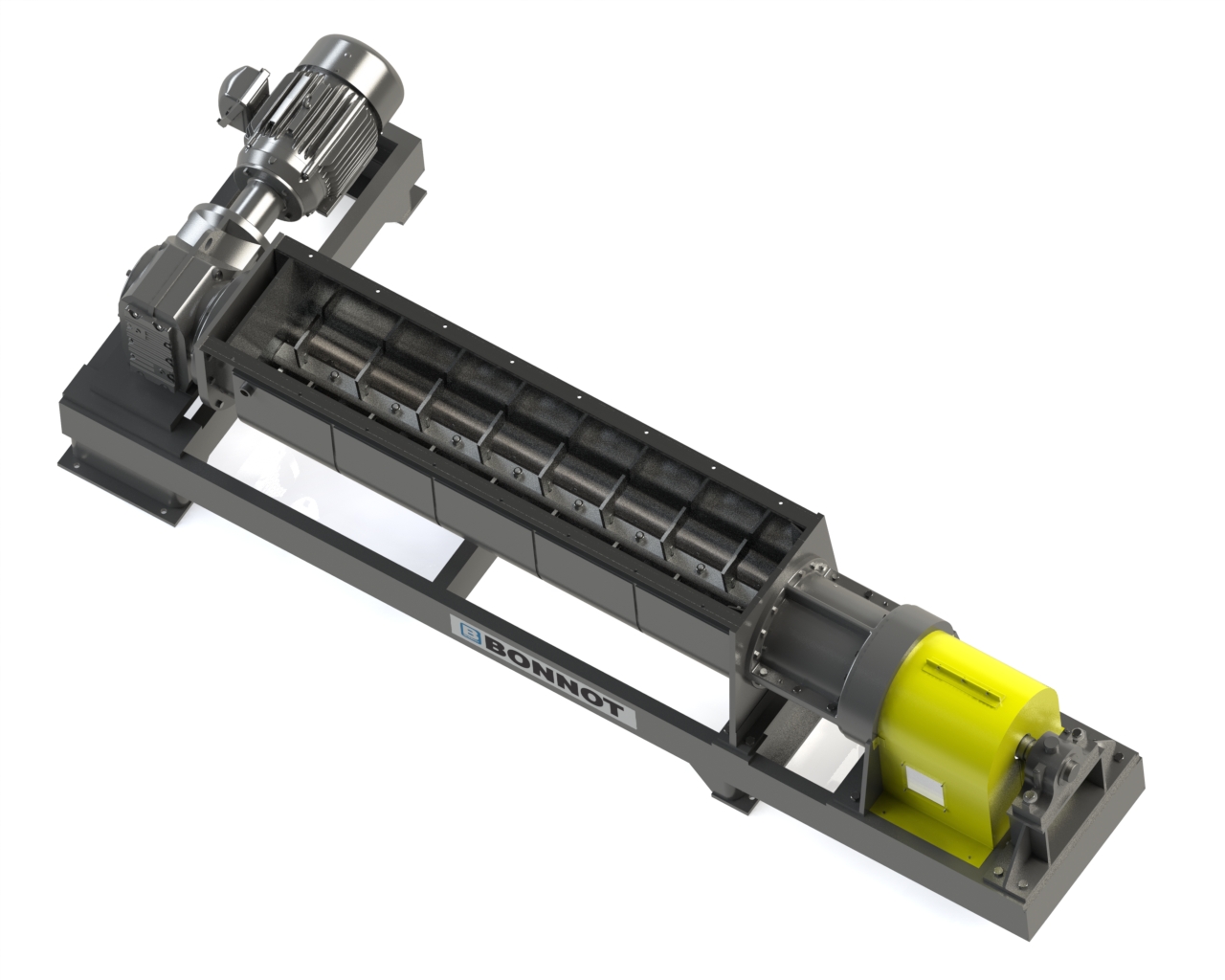
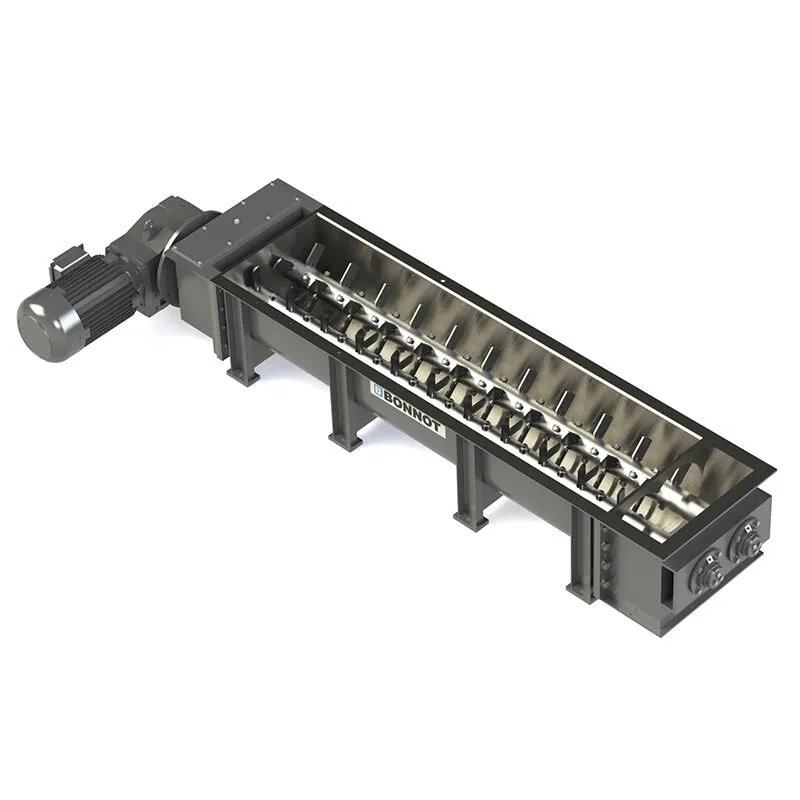
Our Twin Shaft Pugmills incorporate variable pitch knives to change residence time and mixing intensity. The bolt through design also offers cost effective maintenance. An added feature is an adjustable slide gate to further control the mix cycle and throughput. Custom bases and orientation available to match your line layout. Feed beds can be jacketed for temperature management. Integrated controls are available to automatically vary the output rate, maintaining feed levels to optimize downstream equipment.
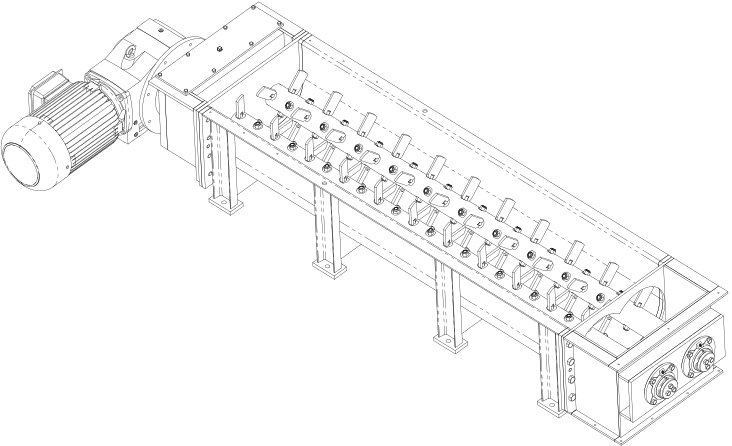
Extruder Design Features
1Shaft
2Bolt Through Variable Pitch Pug Knives
3High Torque Motor
4Outboard Bearing
ADVANTAGES AT A GLANCE
-
01
Eliminates Batch Downtime
Continuous upstream conditioning eliminates the batch preparation steps and start-stop cycling that interrupt downstream extruder throughput in facilities that rely on batch mixers for pre-conditioning.
-
02
Maximizes Downstream Throughput
The practical consequence is that the downstream extruder can operate at its rated throughput continuously rather than alternating between periods of full production and idle waiting for the next batch of conditioned material to arrive. In high-throughput installations where extruder downtime directly reduces production yield, the continuous operation of the pugmill upstream is the simplest available means of maximising the utilisation of the more expensive downstream machine.
-
03
Feed Chute Matched to Your Extruder
Feed chute geometry is matched to the specific downstream extruder model, eliminating the conveyor bridges and hopper adaptors that would otherwise be required to connect a separate mixing machine to the extruder feed.
Product Information
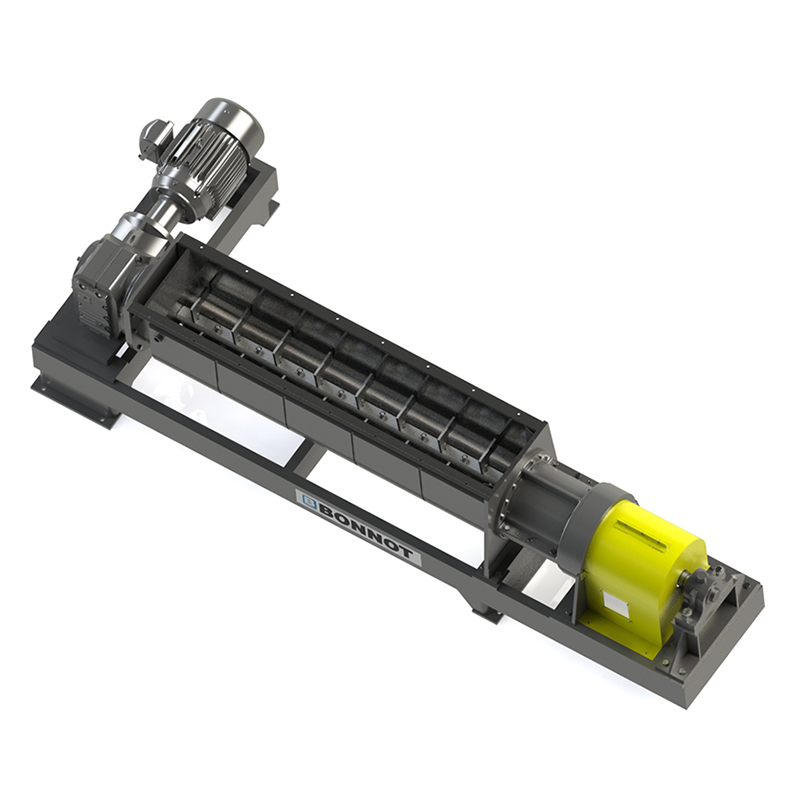
Bonnot Pugmill Mixers are continuous horizontal mixing machines used upstream of extruders to homogenise dry, semi-dry, and plastic materials before they enter the extrusion process. Unlike batch-oriented ribbon blenders or planetary mixers, the pugmill operates continuously – accepting dry powder, granules, or partially hydrated material at one end and delivering a uniformly blended, moistened, and de-lumped mass at the extruder feed point. This makes the pugmill the natural first stage in any continuous extrusion line where ingredients must be blended and conditioned before extrusion without interrupting production flow.
The pugmill’s twin horizontal shafts carry intermeshing paddles that simultaneously shear and fold the material, distributing added liquids – water, binder solutions, plasticisers – evenly through the dry base within a short residence time. This combined shear-and-fold action is particularly important for ceramic pastes, where the dry-to-plastic transition must occur uniformly across the full cross-section of the material to avoid hard and soft zones in the extrudate, and for catalyst preparations, where binder distribution directly affects pellet crush strength and attrition resistance in the finished catalyst body.
INDUSTRIES AND MATERIALS SERVED
Available in different configurations
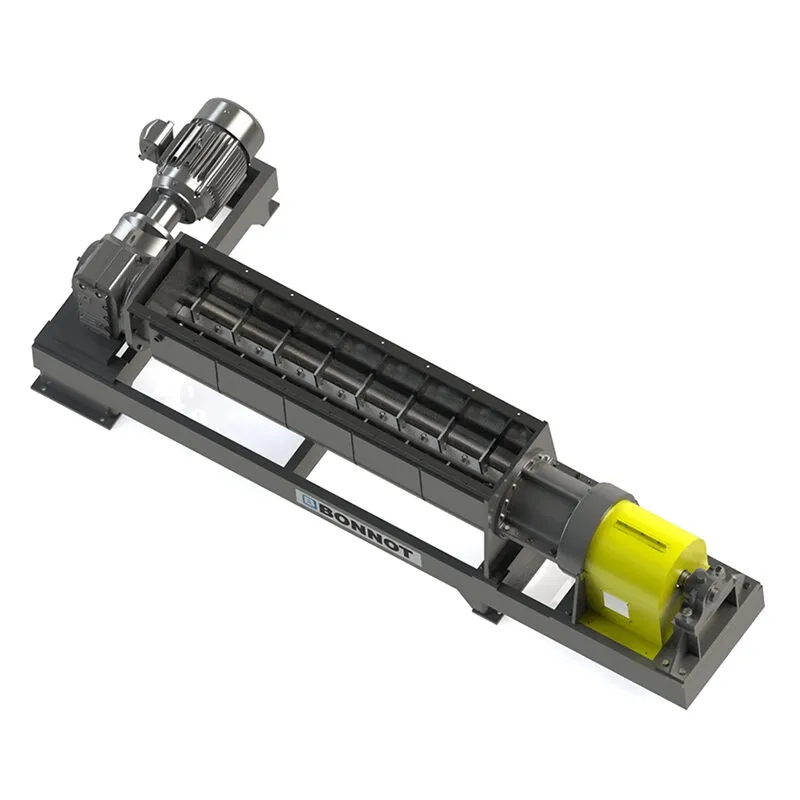
12 Series PM Single
- Output
- 4000lbs/hour
- Layout / Dimensions
- Custom
- Hopper Opening
- Custom
- Motor Power
- Custom
Trusted by the Best


FREE FEASIBILITY TESTING
WANT TO PROVE IT OUT?
The Bonnot test facility offers free feasibility trials for the PM series — different knife configurations, gate settings, and full material testing.
-
VIEW PM SERIES SPECS
EARLY RESEARCH
EXPLORE THE PM SERIES
Not sure which configuration fits your line? We'll help you match your material and batch size to the right setup.
-
SCHEDULE A CONSULTATION
TECHNICAL EVALUATION
BOOK A TECHNICAL CONSULTATION
Discuss knife pitch, residence time, and integration with your downstream extruder directly with a Bonnot process engineer.
-
READY TO TRIAL
BOOK A FREE TRIAL RUN
Bring your material to our facility. We'll run a mix trial, measure key parameters, and send you results.