-
Advanced Wound Care - Chronic and Acute Wound Dressings
Hydrocolloid wound dressings for chronic wound management – pressure ulcers, venous leg ulcers, and diabetic foot wounds – are the primary market for the MD series. These dressings require the CMC and gelatin gel layer to be extruded to a precise and uniform thickness because the dressing’s fluid handling capacity, its ability to maintain a moist wound environment, and its adhesive performance on periwound skin are all direct functions of the gel layer thickness and uniformity.
-
Transdermal Drug Delivery - Patches and Reservoir Systems
Transdermal patches delivering nicotine, hormones, pain medications, and cardiovascular drugs incorporate a drug-loaded hydrocolloid or polymer matrix layer extruded to precise thickness. Uniformity of the extruded layer directly determines dose consistency across the patch area – and therefore the pharmacokinetic profile of drug delivery in the patient. Regulatory submissions for transdermal delivery products include process validation data that demonstrates extruded layer thickness consistency within specified limits as a control on dose uniformity.
-
Ostomy and Stoma Care Products
Skin barrier wafers and paste components for ostomy appliances are hydrocolloid-based and require extrusion into disc or ring geometries that achieve reliable adhesion to peristomal skin while managing the moisture that causes skin barrier failure. The MD series’ precision die geometry controls barrier thickness and the consistency of the geometry that determines how well the appliance conforms to variable peristomal skin anatomy.
-
Wearable Medical Devices and Biosensor Adhesives
Pressure-sensitive adhesive systems for wearable medical devices, biosensors, and continuous glucose monitors incorporate hydrocolloid or acrylic-hybrid gel layers that must be extruded to precise thickness and demonstrate consistent skin adhesion and moisture vapour transmission for the duration of the wear period. The MD series’ precision and validated construction make it appropriate for these emerging applications where the regulatory pathway for the device depends on demonstrating the consistency of the extruded adhesive layer.
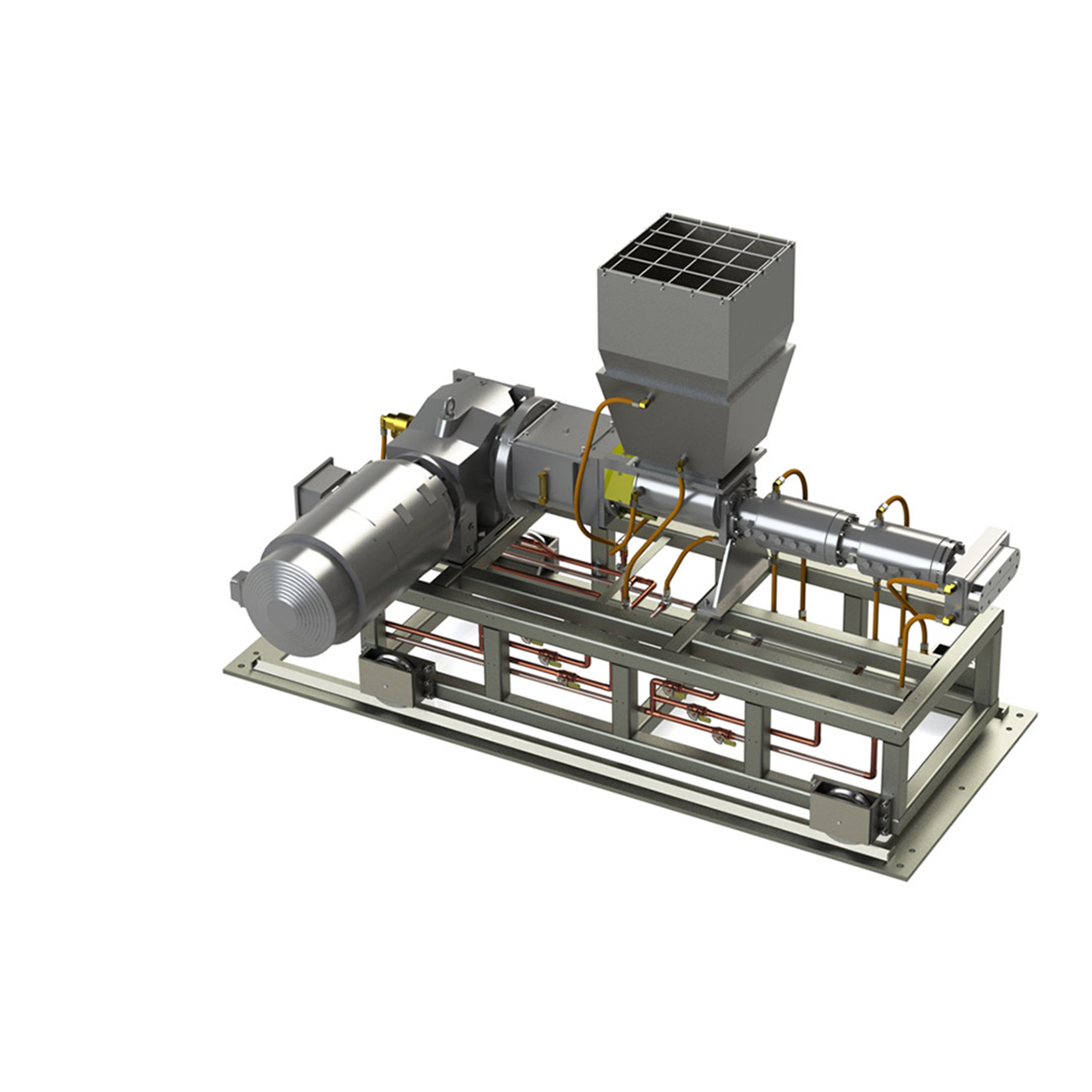
Hydrocolloid & Adhesive Extruders
Our hydrocolloid & adhesive extruders are suitable for a range of medical and pharmaceutical applications
Medical supply/pharmaceutical companies process hydrocolloid, an opaque or transparent adhesive for wound dressing.
The hydrocolloid is die-cut into shapes from a web for specific applications. Bonnot extruders effectively ingest the hydrocolloid slugs from the mixer and create a uniform web.
Our equipment also processes adhesives for transdermal patches.
Creating consistent hydrocolloid webs can be a challenge. The Bonnot Company is pleased to offer feasibility testing at our facility in Akron, OH, USA and a leasing program for trials at customer facilities.
PRODUCT INFORMATION
Bonnot Hydrocolloid Extruders are precision single-screw machines built to the most demanding hygiene and dimensional standards in the Bonnot range, designed for the continuous processing of medical-grade hydrocolloid gel masses used in advanced wound care, transdermal drug delivery, and medical device manufacturing. The MD 4 and MD 6 are constructed throughout in medical-grade stainless steel with surface finishes, seal materials, and design features that satisfy the requirements of FDA-regulated medical device production environments, and the series is supplied as a complete CE-marked turnkey system including upstream mixing, temperature conditioning, and downstream take-off and cutting equipment.
Hydrocolloid masses – typically based on carboxymethylcellulose, gelatin, pectin, or polyisobutylene matrices loaded with absorbent particles – are shear-sensitive, moisture-sensitive, and must be extruded into ribbon, sheet, or film geometries with tight thickness tolerance. Wound dressing performance is directly related to gel layer thickness uniformity: a dressing with variable gel thickness has variable fluid handling capacity across its surface, which translates to inconsistent wound moisture management and variable clinical outcomes. The MD series’ precise speed control and precision die geometry are the mechanical bases for the thickness consistency that dressing performance requires.
ADVANTAGES AT A GLANCE
-
01
Medical-grade construction throughout
Stainless steel contact surfaces finished to pharmaceutical surface roughness specifications, FDA-compatible elastomer seals, and hygienic design principles that prevent product accumulation and facilitate cleaning validation - means that the MD series can be integrated into an FDA-regulated medical device manufacturing line without modification. For a wound care product manufacturer qualifying a new production line under a Design History File and Process Validation protocol, the availability of a machine with traceable material specifications and documented surface finish is a practical requirement, not a preference.
-
02
CE marking of the complete integrated line
Mixing, conditioning, extrusion, take-off, and cutting - simplifies the customer's Installation Qualification, Operational Qualification, and Performance Qualification effort substantially compared with qualifying individually sourced and integrated components. The complete validated system reduces the time from equipment delivery to validated production status, which for a wound care product under development is a direct factor in the time-to-market timeline.
-
03
Low-Shear Processing Preserves Polymer Performance
Low-shear screw geometry and precisely controlled screw speed prevent the mechanical degradation of the hydrocolloid polymer matrix that would reduce the finished dressing's fluid absorption capacity and moisture vapour transmission rate. The relationship between screw shear rate and polymer chain scission is well-established for hydrocolloid systems - processing at shear rates above the critical threshold for the specific polymer causes measurable reductions in gel strength and absorption capacity that propagate directly to clinical performance. The MD series' design specifically addresses this constraint by providing a screw geometry and speed range that processes the hydrocolloid mass without exceeding the critical shear threshold.
INDUSTRIES AND MATERIALS SERVED
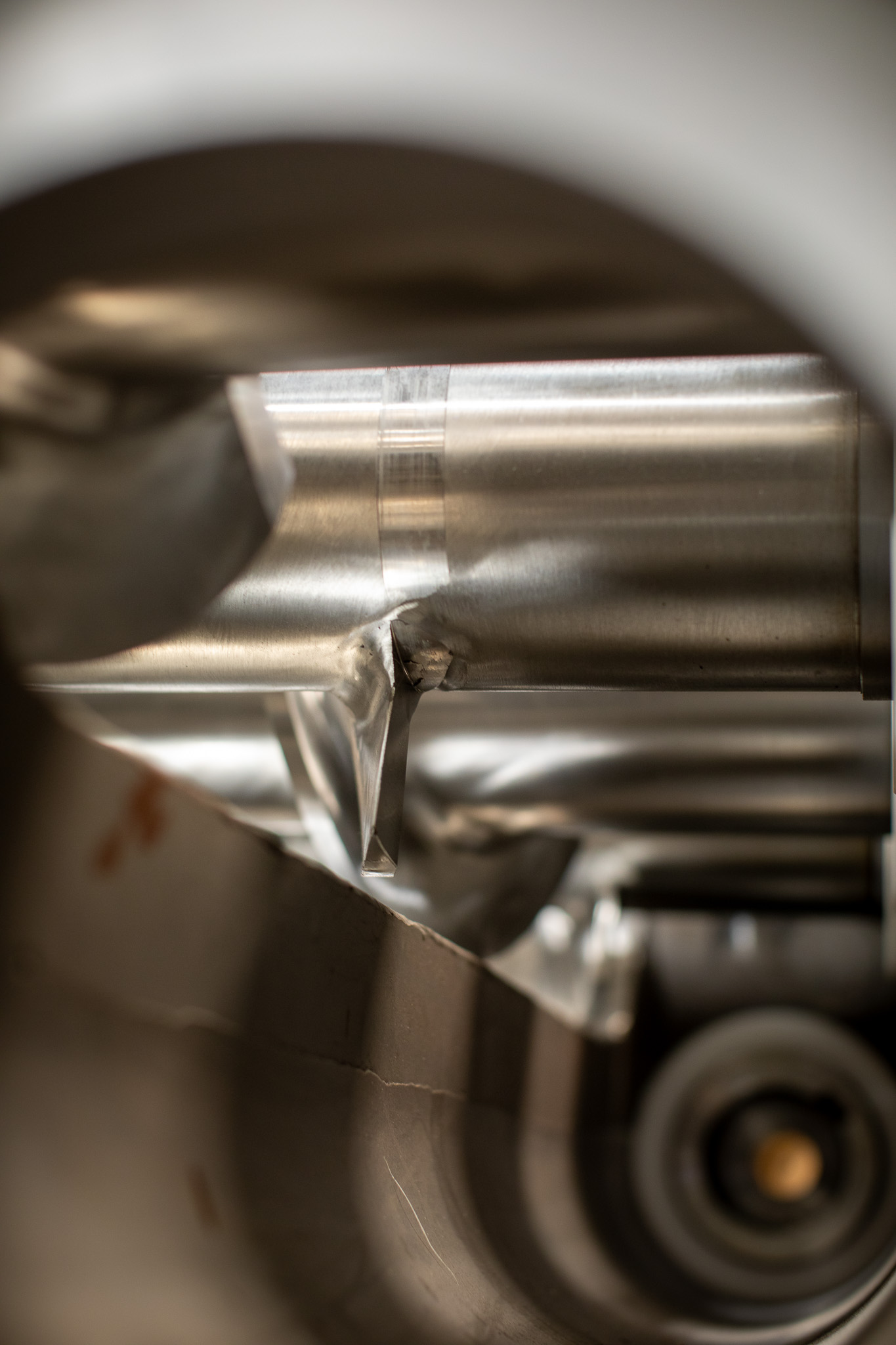
Extruder Design Features
-
01
Turnkey systems including CE
-
02
Screenchangers, Plumbing manifolds & dies available
-
03
Processing control with multiple temperature zones
-
04
Long life bushings & seals
-
05
Customizable dimensions
-
06
Medical grade stainless steel construction
Available in a range of sizes
MD 4 Series
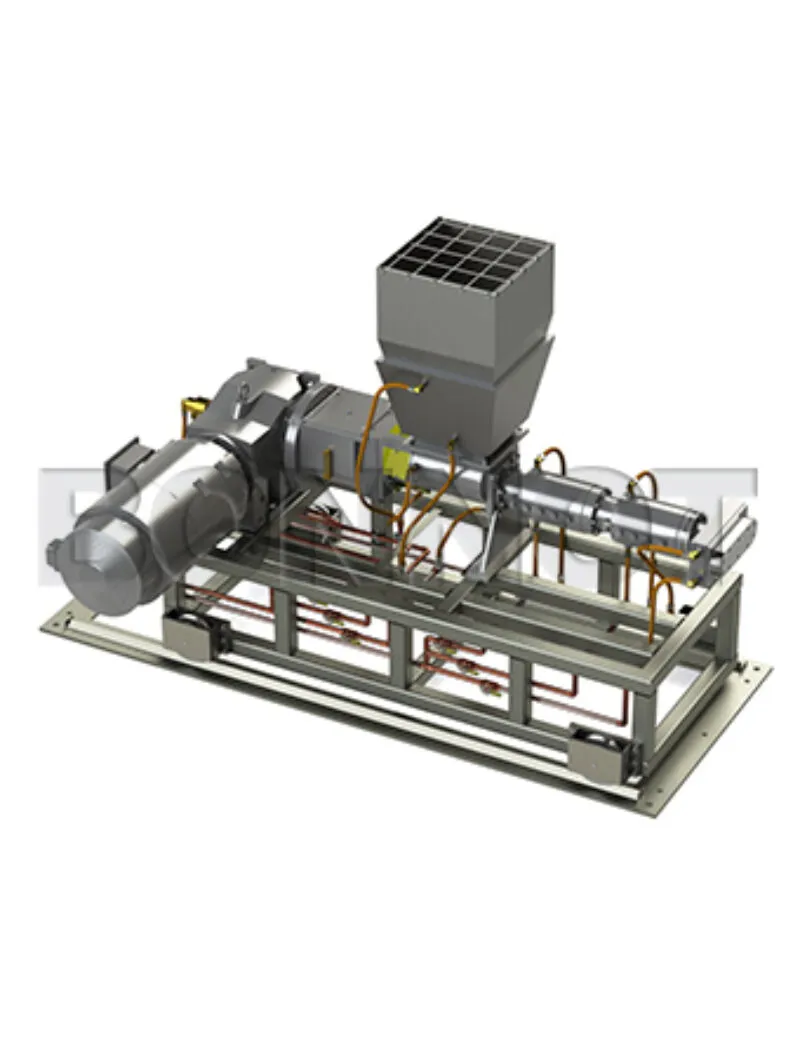
- Output (lbs/hour)
- 400 - 1,000
- Approximate Layout (L x H x W)
- 112" x 46" x 72"
- Hopper Opening
- 11.75" x 9.88"
- Motor Power
- 20 HP
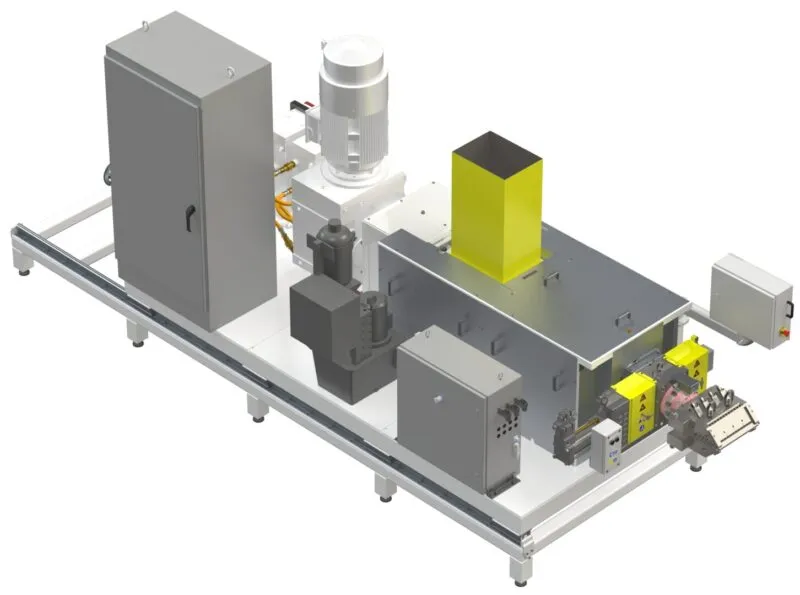
Uniform processing of hydrocolloid web
The Bonnot Company’s Hydrocolloid & Adhesive extruder designs offers uniform processing of your products.
Packers aid ingestion of hard to feed materials..
The Bonnot MD 4 Series Extruder
This extruder specification included a complete plumbing manifold for precise temperature control.
It also includes The Bonnot Company’s fishtail nozzle die.
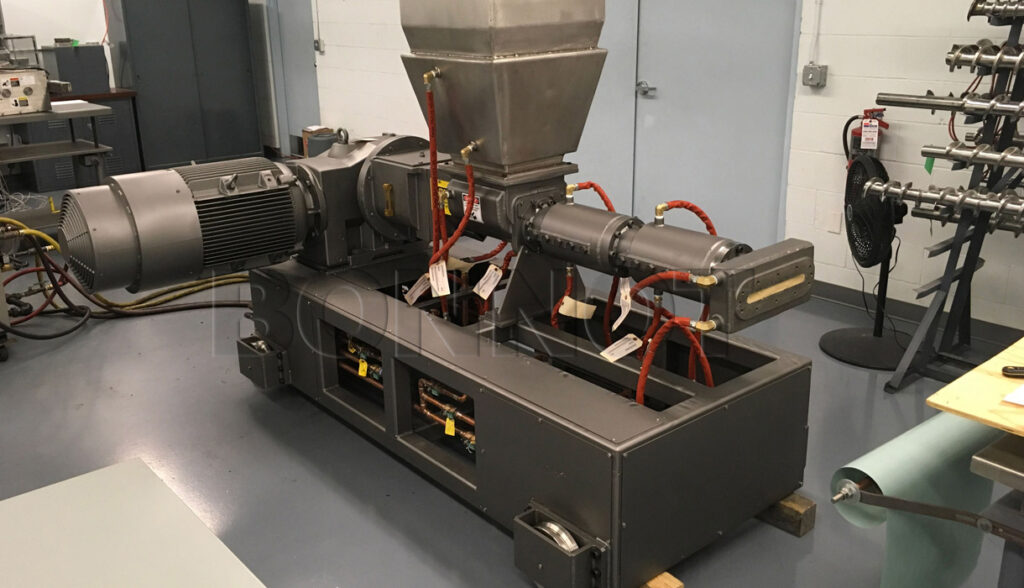
A complete CE turnkey system
Watch our President describe the features of this turnkey CE compliant system.
FREE FEASIBILITY TESTING
WANT TO PROVE IT OUT?
The Bonnot test facility offers free feasibility trials for hydrocolloid extrusion — different web widths, formulations, and full material testing.
-
EXPLORE THE HYDROCOLLOID SERIES
EARLY RESEARCH
EXPLORE HYDROCOLLOID EXTRUSION OPTIONS
Not sure which configuration fits your web dimensions? We'll help you match your formulation to the right setup.
-
SCHEDULE A CONSULTATION
TECHNICAL EVALUATION
BOOK A TECHNICAL CONSULTATION
Discuss web width, uniformity, and medical-grade requirements directly with a Bonnot process engineer.
-
READY TO TRIAL
BOOK A FREE TRIAL RUN
Bring your formulation to our facility. We'll run a trial, measure key parameters, and send you samples.