Twin Packer Extruders
The Industry Standard in Single Screw Extrusion
Our most popular design for over 50 years
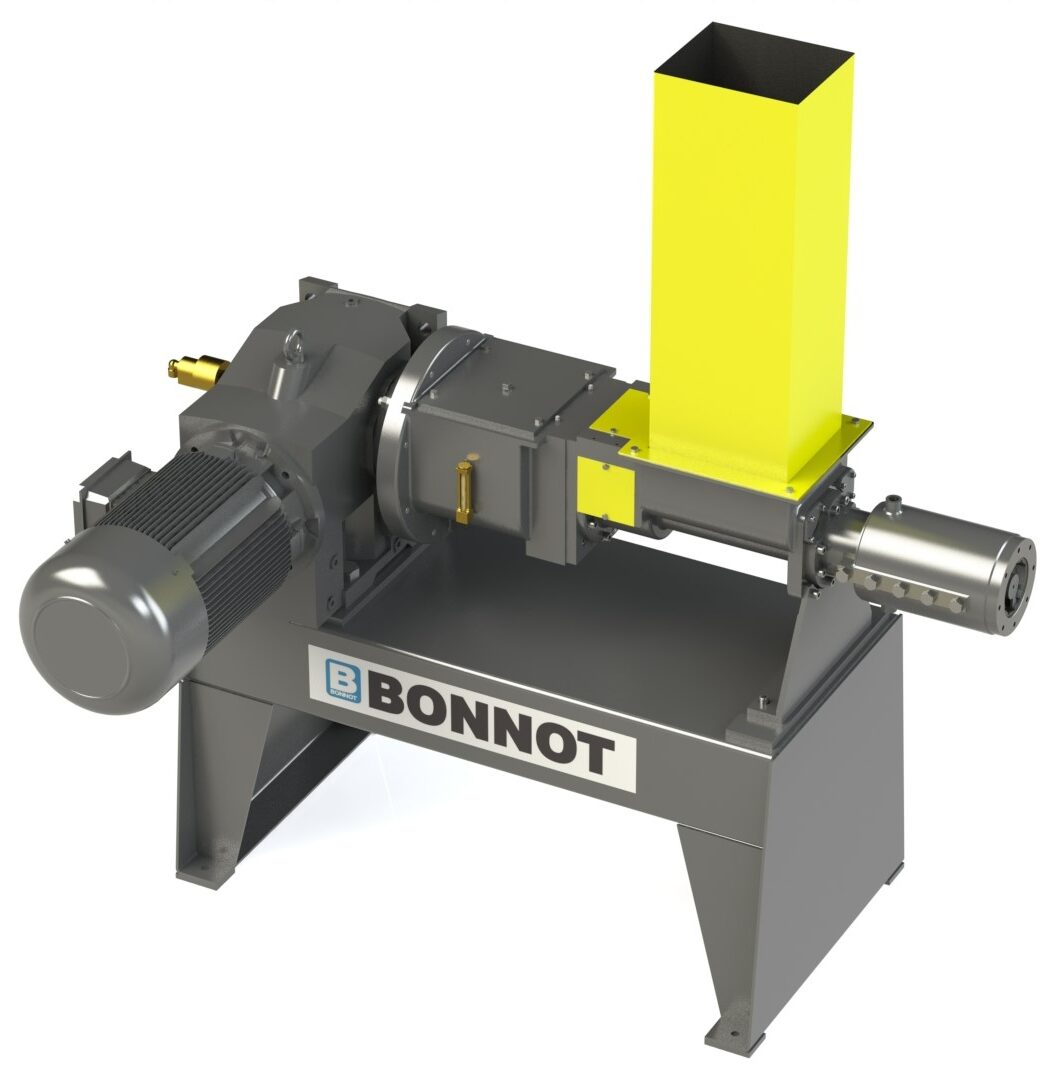
Bonnot developed the Twin Packer concept to enhance ingestion of difficult materials that are prone to bridging in the feed section.
These single screw designs are very versatile and are employed in a wide variety of industries including chemical catalysts, sealants, pet treats and many more. The packer designs can be modified to improve the feed depending on the application. They can also be driven independently with dedicated gear motors, further enhancing process control. The line of Bonnot Twin Packers can be designed with a wide variety of screw geometries, different length-to-diameter ratios, horsepower, RPM ranges and controls to optimize your application.
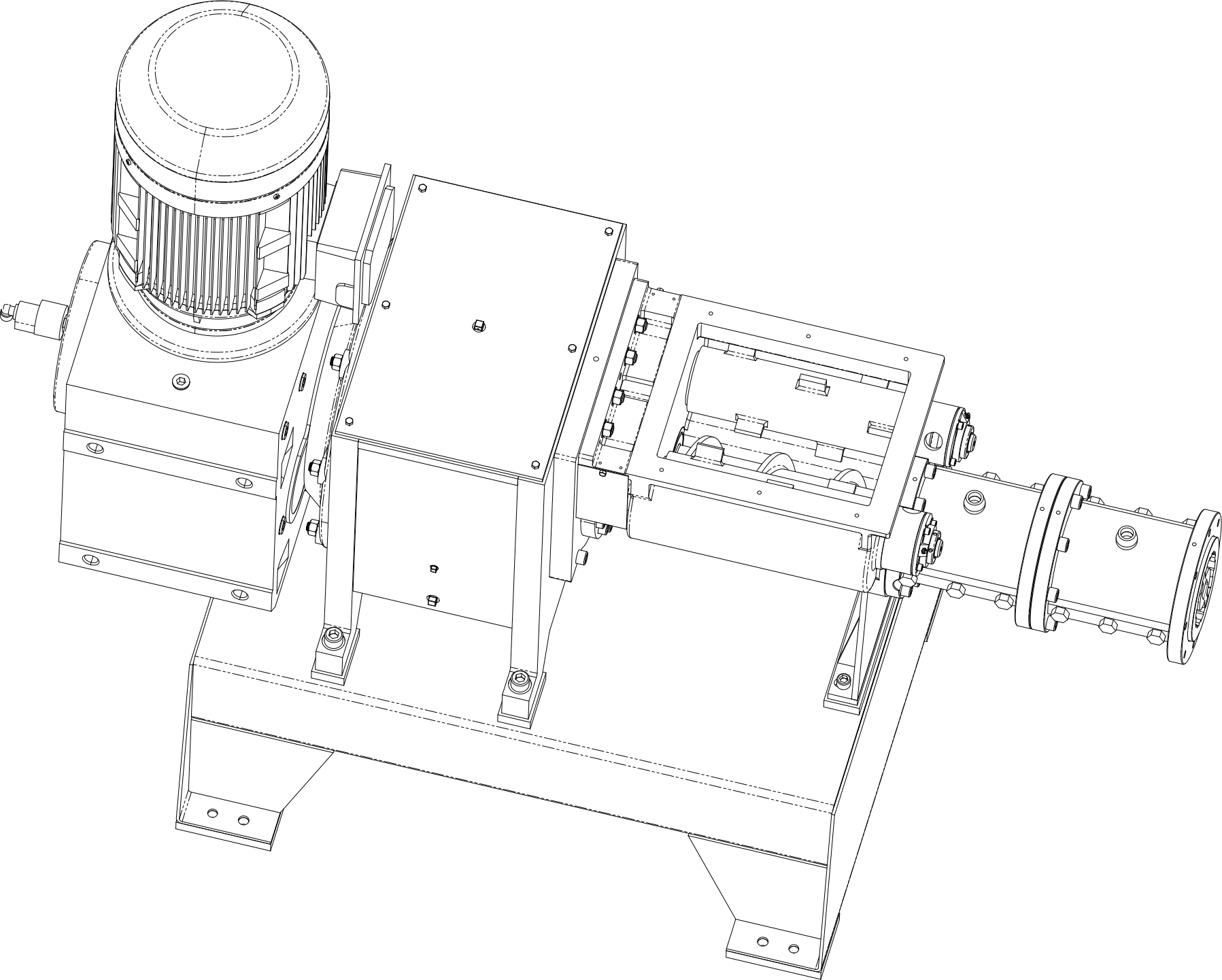
Extruder Design Features
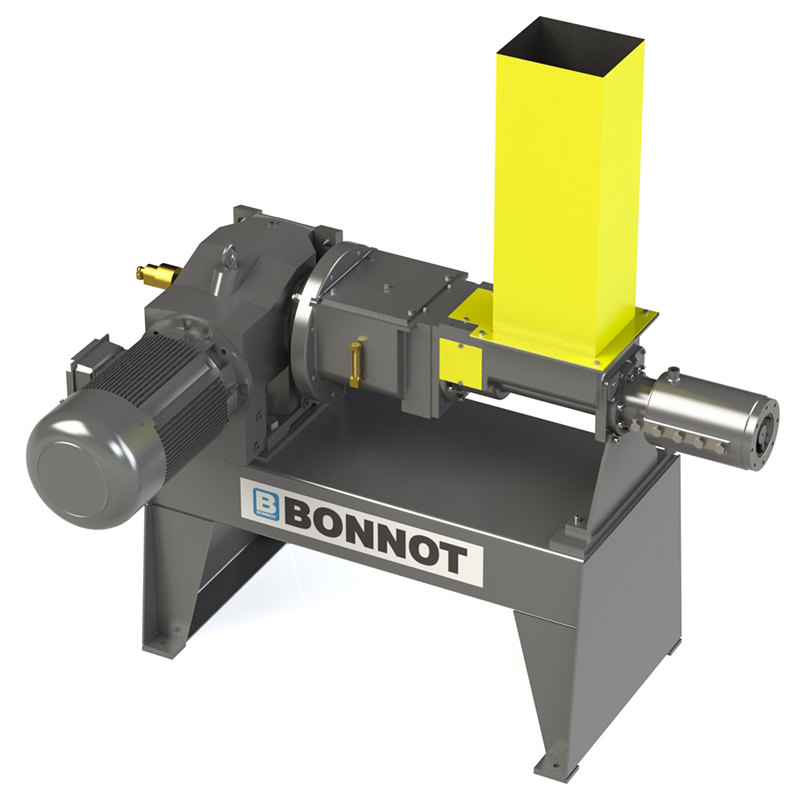
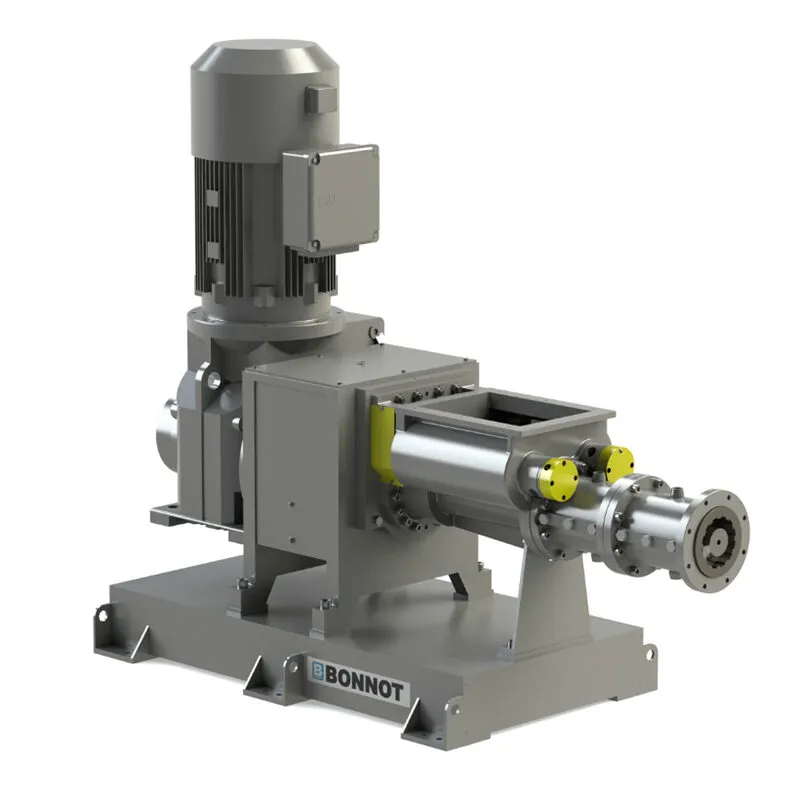
1Twin Packers to Aid Material Ingestion
2Jacketed Barrels for Temperature Control
3Rotary Union for Auger Temperature Control
4High Torque Gear Motor Drive
ADVANTAGES AT A GLANCE
-
01
Positive Feeding for Difficult Materials
The counter-rotating auger design delivers positive feeding, aiding material into the extruder feed throat and reducing bridging & surging that can affect gravity-fed systems when processing dense, tacky, or poorly flowing materials. This makes the Twin Packer the specification choice when a material's bulk density, particle morphology, or rheological behaviour prevents reliable gravity feeding — conditions that commonly present with petroleum coke pastes, alumina catalyst pastes, viscous sealant bases, and high-fat pet food doughs.
-
02
Three-Tier Wear Protection Matched to Material Abrasivity
Wear protection is specified in three tiers — chrome plate, Stellite 6 hard-surfacing for moderately abrasive materials, and HVOF-applied tungsten carbide for the most demanding applications — allowing the wear-surface specification to match the actual abrasivity of the material rather than defaulting to an over-engineered solution that increases both capital cost and maintenance complexity. This hierarchy is directly applicable to the range of materials the Twin Packer processes, from low-abrasion food doughs at one end to highly abrasive carbon and mineral pastes at the other.
-
03
Predictable Scale-Up Across Five Frame Sizes
Across five frame sizes from 1" to 8", the Twin Packer maintains full mechanical similarity with the main Bonnot extruder range, meaning that process parameters and feed geometry optimised on the laboratory-scale TP transfer directly to production scale without re-engineering. This scale-up predictability is a significant commercial advantage for customers who develop new formulations on the 1" lab machine and need confidence that the feed behaviour observed at pilot scale will be reproduced on the 8" production unit.
PRODUCT INFORMATION
The Bonnot Twin Packer is a positive-feed mechanism engineered to solve a common cause of extruder underperformance: inadequate material ingestion. Rather than relying on gravity or operator assistance, the twin counter-rotating augers positively displace and aid material into the extruder’s feed throat. Available in five sizes from 1″ through 8″, the Twin Packer is configurable across all of Bonnot’s major application families, with metallurgy selected from carbon steel, 304SS, 316SS, or 17-4PH stainless steel depending on the corrosivity and temperature of the process environment.
Three independent temperatures give operators precise control over the process.
INDUSTRIES AND MATERIALS SERVED
-
01
Chemical Processing - Catalyst and Adsorbent Pastes
The Twin Packer is widely specified for positive-feeding alumina, silica-alumina, and zeolite catalyst pastes into extruders producing trilobe, quadrilobe, and cylindrical catalyst bodies for fixed-bed reactors. Catalyst paste formulations - including DeNOx SCR catalysts, hydroprocessing catalysts, and reforming catalysts - are particularly sensitive to feed pressure consistency, because variation in feed rate translates directly into variation in extrudate diameter, uniformity, density & porosity and, ultimately, in reactor bed pressure drop and catalyst performance.
-
02
Carbon and Graphite Electrode Manufacturing
Petroleum coke and pitch-binder pastes for graphite electrode, carbon anode, and carbon brush manufacture are among the most demanding Twin Packer applications, combining high bulk density, high abrasivity, and a narrow pitch-binder temperature window. The Twin Packer's positive feed capability manages the elevated viscosity of cold carbon mixes without the pre-softening step that would otherwise be required, while the independent barrel temperature zones allow for tighter process control..
-
03
Rubber and Elastomer Processing
Cold rubber compound, EPDM, silicone, and butyl rubber all resist gravity feeding because of their high tackiness and low bulk density when in compound form. The Twin Packer or rake and packer design eliminates the manual feeding operations common on open-throat machines and enables the continuous, unattended production runs that are standard practice in modern rubber processing facilities.
-
04
Industrial Sealants and Adhesives
Highly viscous butyl, polysulfide, and polyurethane sealant bases resist gravity feeding because their yield stress prevents flow under their own weight in standard hopper geometries. The Twin Packer's positive-displacement action maintains consistent feed rate even as batch viscosity varies within a production run - a property that is directly responsible for consistent bead geometry at the die face and, downstream, for accurate cartridge-fill weights.
-
05
Food, Pet Food, and Nutraceutical Processing
Food-grade stainless steel construction enables use of the Twin Packer with high-moisture, high-fat, or viscous food doughs - whole-muscle meat analogues, high-fat pet food mixes, and supplement pastes that flow poorly under gravity alone. The three-zone temperature capability allows chilling of high-fat mixes that would otherwise smear and bridge, while the same machine can heat stiff cold-process doughs that require warming before they achieve the plasticity needed for consistent extrusion.
-
06
Clay, Ceramics, and Mineral Pastes
Dense ceramic bodies and mineral pastes, including bentonite blends and technical ceramic paste formulations, compact and bridge in standard hopper geometries because of their high bulk density and relatively low plasticity. The Twin Packer maintains consistent throughput on these high-resistance materials, ensuring that the extruder screw receives a steady, pressure-compacted feed rather than the intermittent gravity flow that causes dimensional variation in the extrudate.
available in a range of sizes
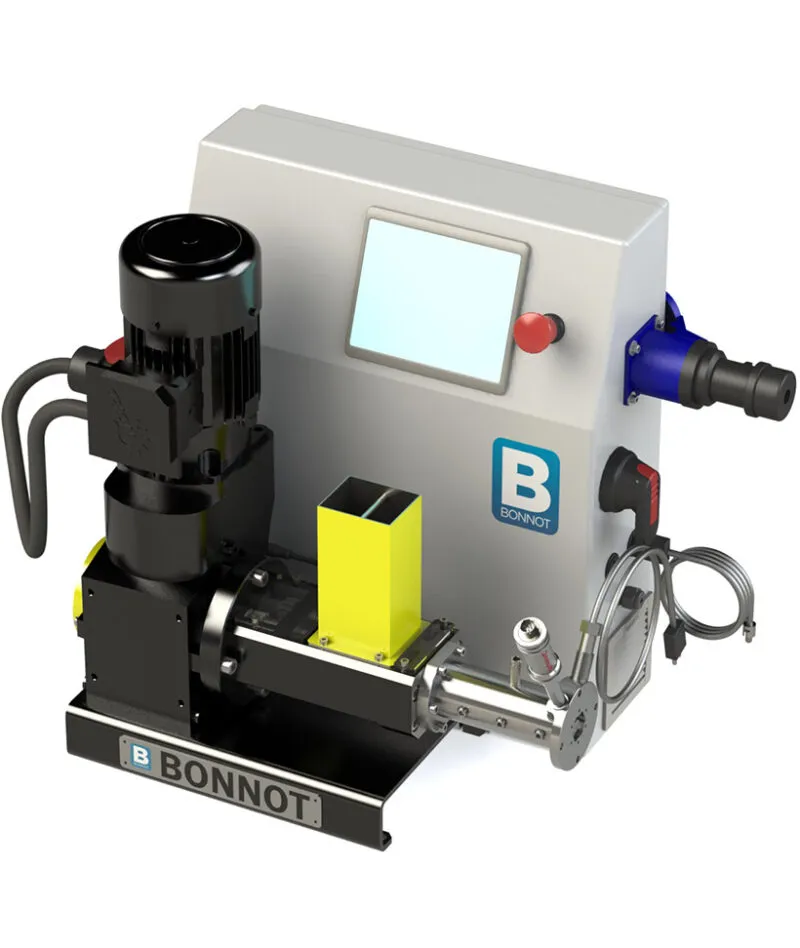
1 Series TP X
- Output
- 5-15 lbs/hour
- Layout
- 21" x 22" x 16"
- Hopper Opening
- 3” x 2.4”
- Motor Power
- 0.5 HP
- Contact Components
- Customizable
Twin Packers
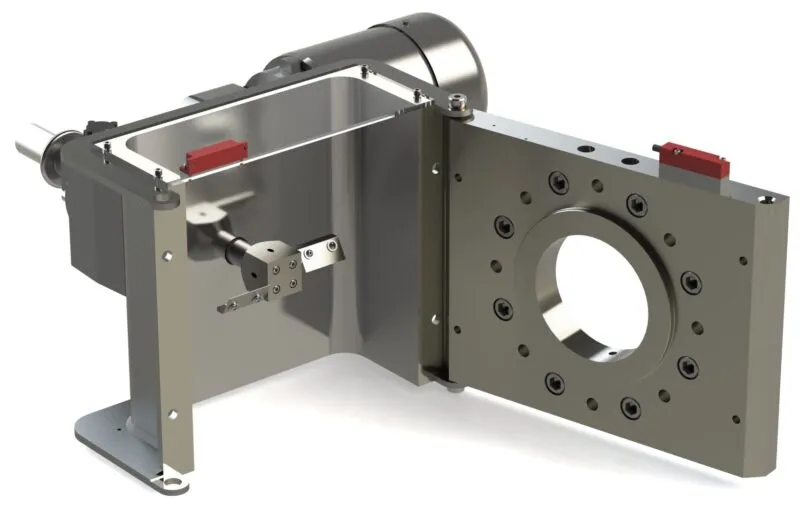
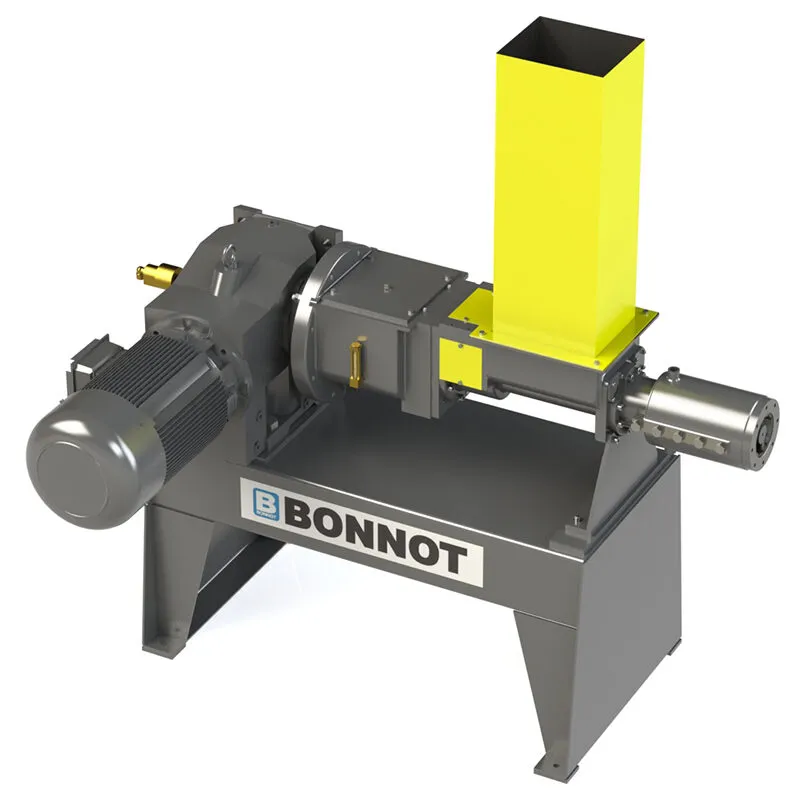
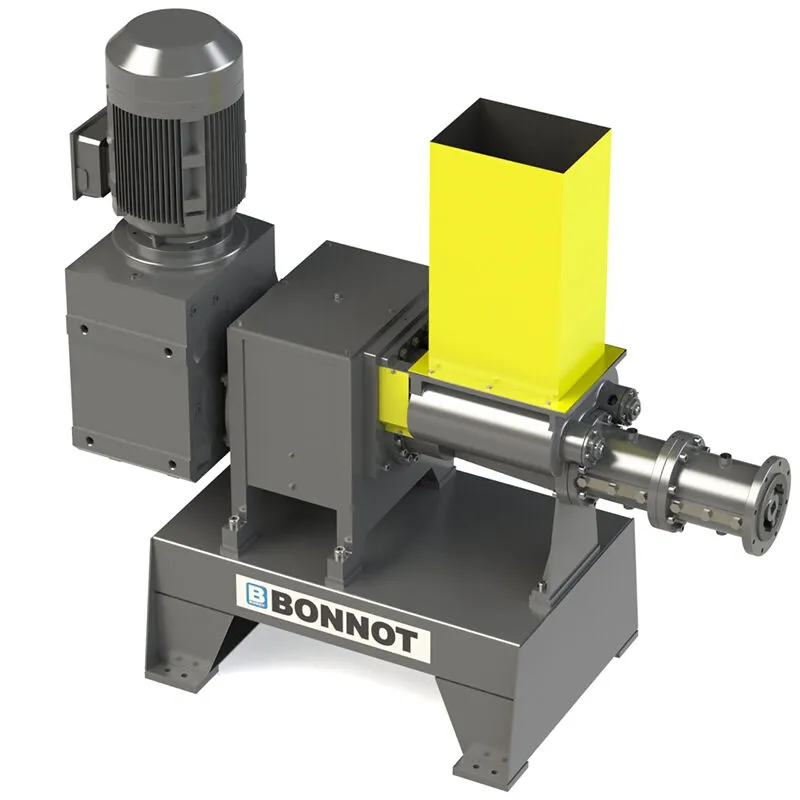
The twin packers aid material ingestion into the hopper. Packer and hopper dimensions are customizable, in this case they have chrome plating.
Processing Catalyst
The Bonnot Twin Packer extruders are used in a wide range of applications.
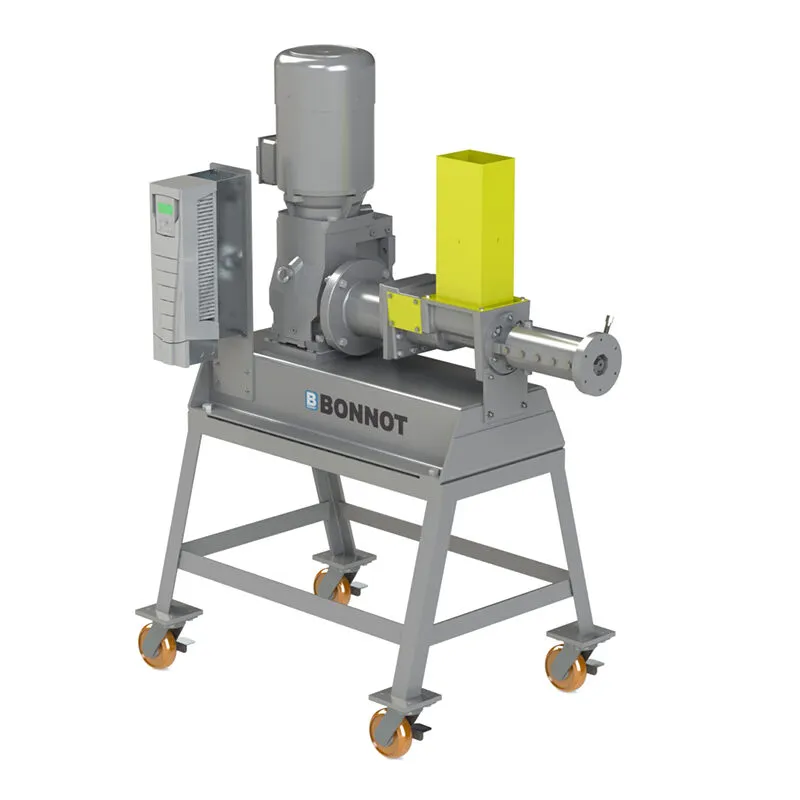
Bonnot 2 Series Twin Packer Extruder and Cutter
FREE FEASIBILITY TESTING
WANT TO PROVE IT OUT?
The Bonnot test facility offers free feasibility trials across the full TP series — different frame sizes, wear-surface options, and full material testing.
-
VIEW TP SERIES SPECS
EARLY RESEARCH
EXPLORE THE TP SERIES
Not sure which frame size fits your process? We'll help you match your material to the right configuration, from 1″ through 8″.
-
SCHEDULE A CONSULTATION
TECHNICAL EVALUATION
BOOK A TECHNICAL CONSULTATION
Discuss wear-surface selection, feed geometry, and scale-up directly with a Bonnot process engineer.
-
READY TO TRIAL
BOOK A FREE TRIAL RUN
Bring your material to our facility. We'll run a trial, measure key parameters, and send you samples.