Home » News » Page 4

The Bonnot Blog

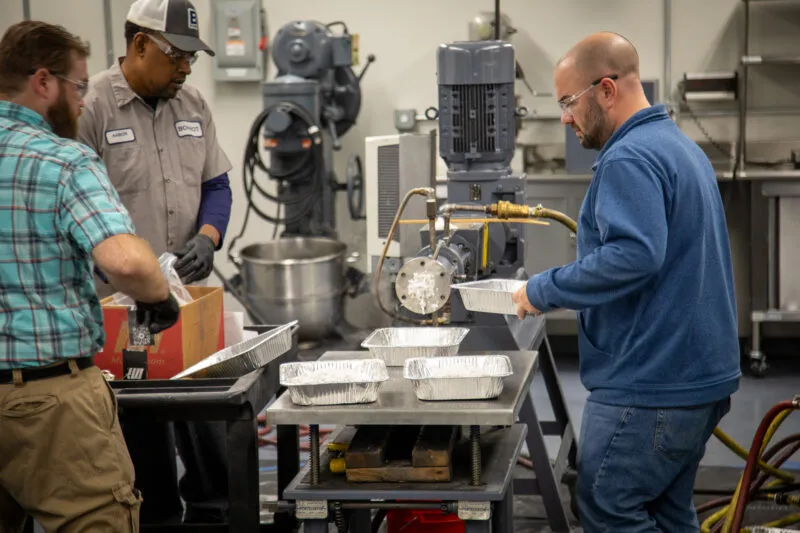
Three Bonnot engineers in safety glasses collecting extruded product on trays beside a single-screw extruder in the test room.a table. Machinery—including equipment from a single screw extruder manufacturer—and various tools are visible in the background. All men wear safety glasses; two wear work uniforms and gloves.

October 10, 2018

What is an Extruder, and Does Our Company Need One?

To understand what an extruder is, we must first know what the process of extrusion is. Extrusion is when a material, usually pellets, dry powder, rubber, plastic, metal bar stock or even food is heated and pushed through a die. A die is essentially a mold that shapes the material as it is forced through the small opening to the other side. It's one of the most common ways to produce sheets and strips of stock metal, plastic and rubber shapes.
Archive
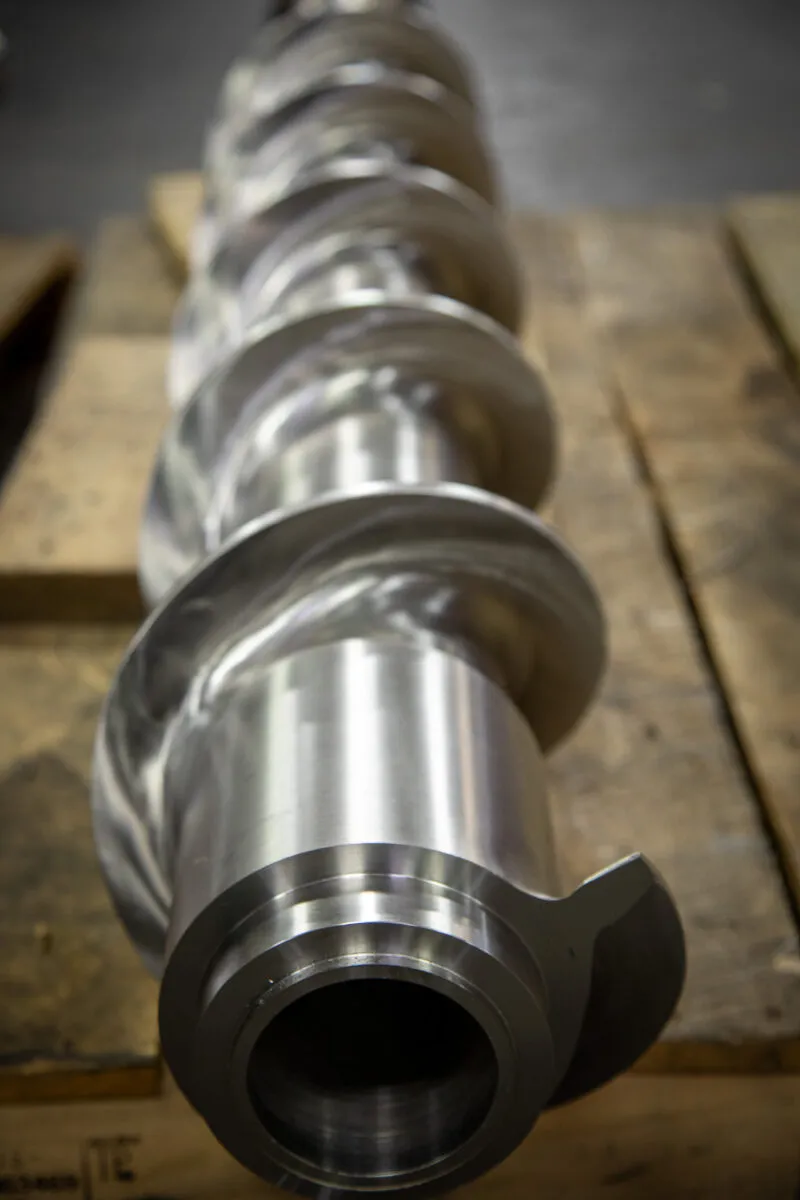
A large, shiny metal helical screw or auger lies horizontally on a wooden pallet, with the focus on the front end and the background softly blurred.

August 6, 2018

Basic Theoretical Factors in Extrusion Augers

If you take a bolt, having a nut on it, and revolve the bolt, in a fixed axis, both the bolt and the nut revolve. Then, if you hold the nut with a wrench, and revolve the bolt, in the proper direction, the nut will travel forward and fall off the end of the bolt. A clay auger works in a similar manner. Inside of the closed auger barrel there is a “clay nut” which moves forward on the screw. The clay nut is ephemeral. The clay nut is constantly being destroyed by passing off the end of the auger, and it is constantly being reformed by feed material entering the closed auger barrel from the feed hopper, or vacuum chamber.

Archive
A person operates a metal lathe, using a hand tool to adjust a metal workpiece. Metal shavings are visible, and precision measuring instruments—common in the workshop of a single screw extruder manufacturer—are attached to the machine.

August 6, 2018

Why Use Extruders?

Words, such as pellet, briquette, nodule, ball, sphere and compacting, all relate to some type of agglomeration and are familiar to all of us. Agglomeration has become an essential operation for reasons, such as processed material in some cases can shipped without special packaging, reduction of fines and dust, easier and more efficient handling, less volume for a given weight, and there are even some instances where the finished product is psychologically more attractive. Also, when the finished product consists of two or more ingredients, agglomeration will provide uniformity and prevent separation.

Archive