The Value of the “Unsuccessful” Trial: Why R&D is a Journey, Not a Destination
18th March 2026
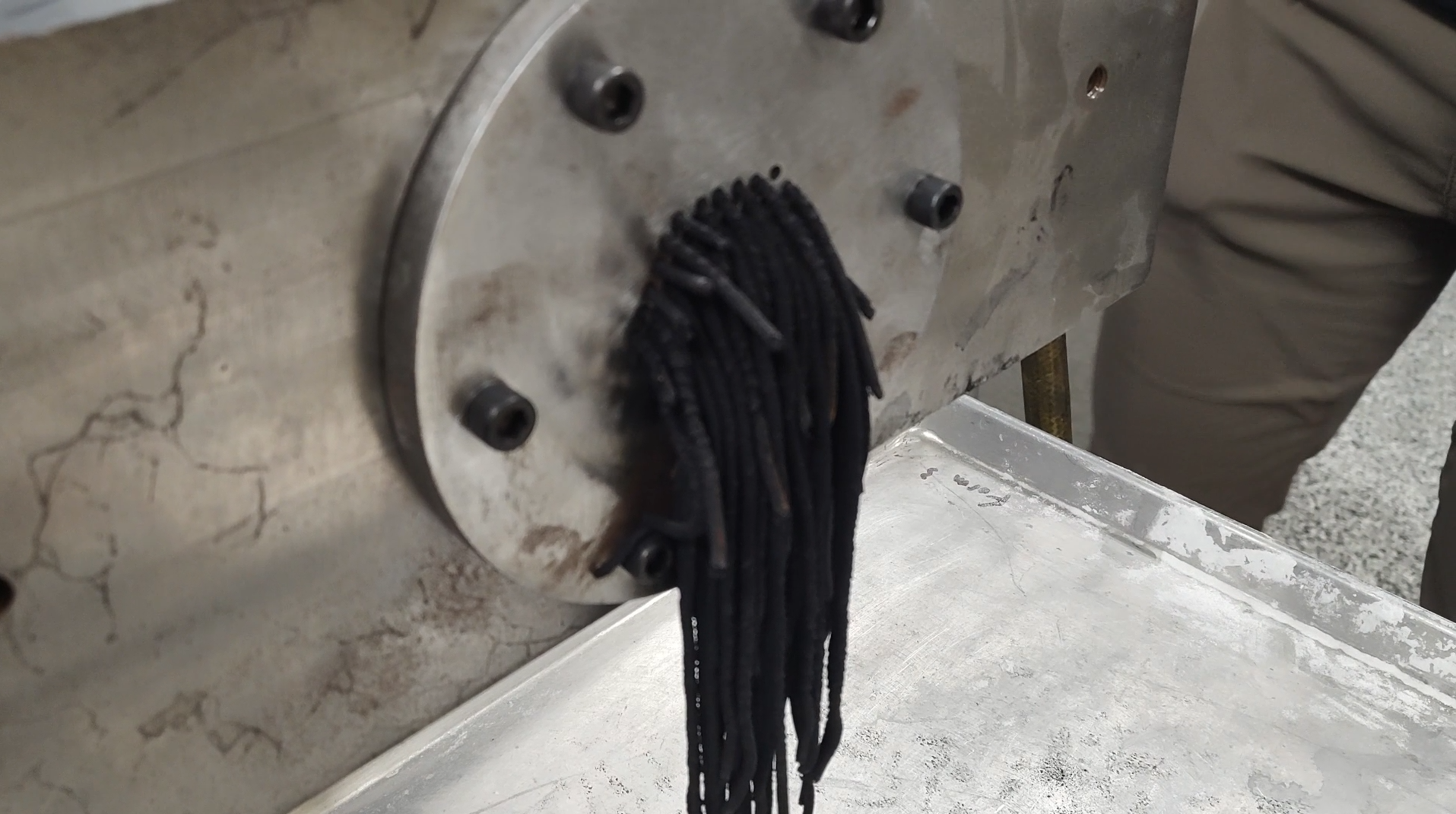
Research and Development is rarely a straight line from problem to solution. More often, it is a series of adjustments, observations, and refinements. While a successful trial is the goal, the “unsuccessful” ones often provide the most critical data for a breakthrough.
Recently, we conducted a series of extrusion and pelletizing tests for a carbon-based material. The objective was to transform raw powder into consistent pellets. On paper, the plan was sound, but the material presented several challenges in practice.
During the testing, we encountered persistent issues with die clogging and material clumping. We tried multiple formulations, varying moisture levels from 8% down to dry powder, and swapped between different die geometries. Despite these adjustments, the pellets did not form as expected. In the final stages of the trial, we observed that while the material extruded better at certain temperatures, it still clumped together during the cutting process.
In some contexts, this might be viewed as a failure. In R&D, we see it differently. These results told us exactly where the boundaries of this material lie. We learned that the raw powder’s base moisture—recorded at 17.2%—requires a much more precise balance of added water than initially anticipated. We also identified that specific die designs were prone to clogging with this particular carbon grade, narrowing the search for the right equipment configuration.
Our dedication to customer success means we don’t just provide a report of what didn’t work. We use that data to map out the next steps. For this specific process, we are already looking at how a slight increase in water percentage or a change in thermal management might stabilize the output.
Assisting customers with new processes and opportunities is a journey of trial and error. We remain committed to the process because we know that every clogged die or clumped pellet brings us closer to a reliable, scalable production method. Innovation requires patience and a willingness to learn from the data, even when it isn’t what we hoped to see on day one.