Catalyst Extruder Trials: What to Send Bonnot’s Test Room and What Comes Back
By Jerome Cook, International Business Development
Bonnot’s test room in Akron, Ohio runs a customer’s own catalyst or sorbent paste on a single-screw catalyst extruder, at laboratory or production size, before any capital is committed. The written report says whether the mix formed clean extrudate through the die, what we changed to get there, and what is still unknown. The Bonnot Company has built single-screw extruders since 1891.
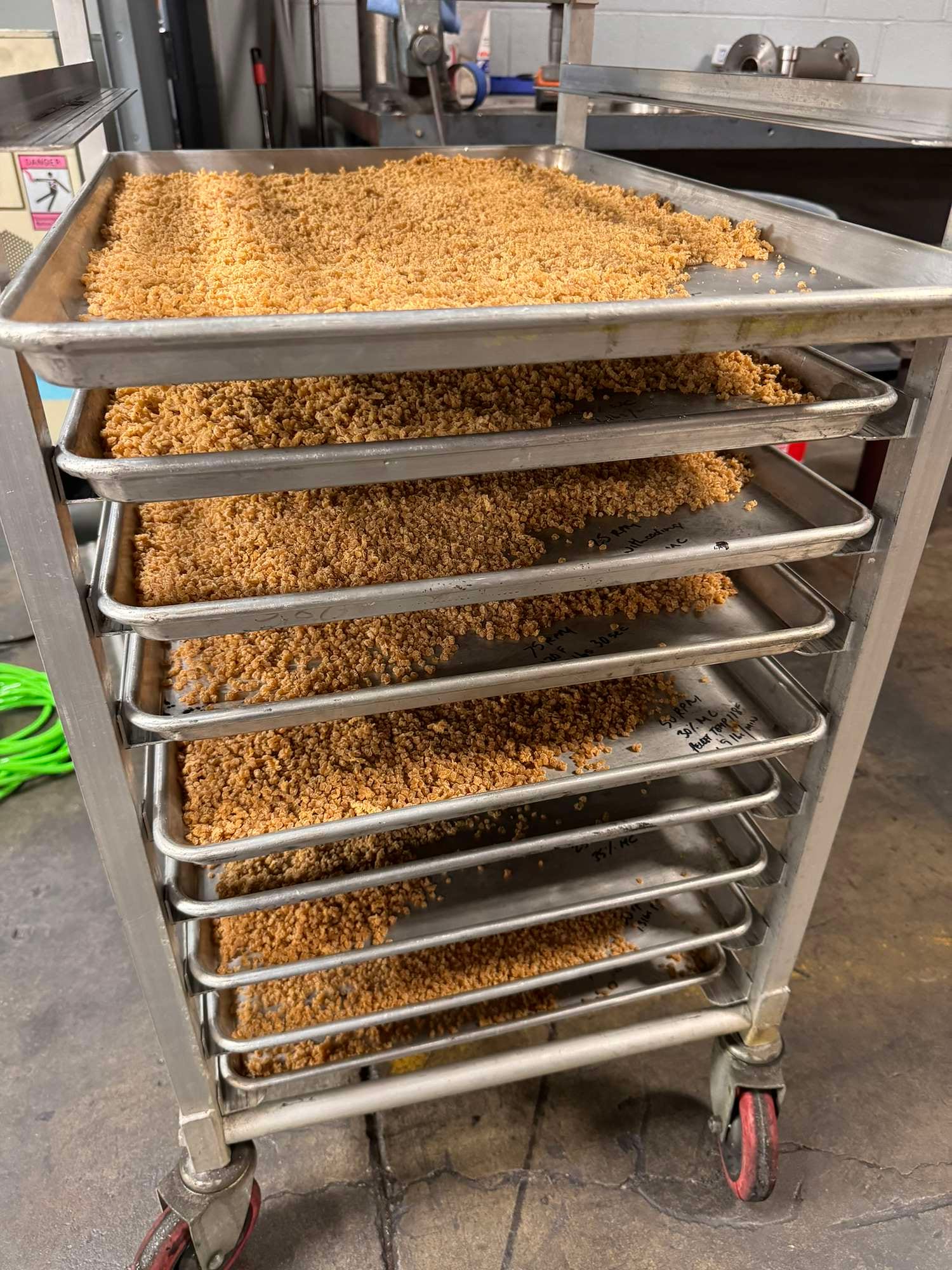
What to send for a catalyst trial
Send the powder, the binder and the liquid as you would mix them in production, along with the shape you need to end up with. That means the extrudate form (solid cylinders of a given diameter, for example) and the length you want after cutting. A paste mixed in a different way from your plant practice tells us about the other mix, not yours.
Ask us first how much material the machine size needs. The quantity depends on whether the run is on a laboratory machine or a production-size one, and it is better to settle that before anything ships. If you have a target for the finished pellet, such as crush strength after drying and calcining, tell us. We can’t measure what happens in your furnace, but knowing the target tells us what the extrudate has to look like when it leaves the die.
Why a paste that mixes well can still fail at the die
A paste can look right in the mixer and still fail at the die, because the extruder asks more of it than the mixer does. The screw compacts the paste and forces it against the resistance of the die plate. Under that pressure, water and binder either hold the solids together or they don’t.
With too much free water, the liquid can separate from the solids as pressure builds, so the material reaching the die is stiffer than the mix that entered the feed section while the extrudate that does emerge is wet and soft. It slumps, sticks to its neighbors and loses its shape on the belt. With too little water or binder, the pressure climbs, the surface of the extrudate tears and the strands break into short pieces instead of forming a continuous length. Both are moisture and binder problems, and neither shows up reliably in a bench test.
Our test-room trials on other pellet-forming pastes showed how much a small change in water content can matter, down to whether pellets formed at all. That is the reason we ask for your actual mix instead of a stand-in. Air trapped in the paste is a further variable. If the feed carries air into the barrel, it can leave voids or blisters in the extrudate, and a vacuum extruders configuration removes it before the die. The trial shows whether your material needs it.
Laboratory machine or production size
A run on a laboratory extruders machine answers the first question, which is whether your paste forms at all. It tells you which die opening and which moisture range give clean extrudate, and it does so on a small quantity of material. For a new formulation, that is often where to begin.
A production-size machine answers a different question. Pressure, friction heat and the time the paste spends in the barrel all change with scale, and a paste that behaves on a small screw can behave differently on a large one. If the decision on the table is which production machine to buy, or if the formulation is already proven at bench scale and you need to see it at plant throughput, the trial should be on the size of machine you would buy. We will tell you which applies to your material and your decision when you ask about a trial.
What the written report tells you
The report states what formed and what did not. It records what we adjusted to get from one to the other, whether that was the feed section temperature, the die, the screw speed or a change to the moisture level, and what the material did in response. It also lists what still needs work, so you know where the remaining risk sits before anyone signs a purchase order.
The point of the report is to be usable in a capital review. An engineer who has to explain to a plant manager why one machine configuration was chosen can point to what the material actually did, instead of to a supplier’s general assurance. Where the trial settled the question, the report says so. Where a further run is needed on a particular variable, it says that as well. Either way, the decision rests on your own material run on a real machine. This is the purpose of our feasibility testing.
From a trial to a production catalyst extruder
The production machine is the same standard single-screw design that ran your trial, built to order with the options the trial showed your process needs. That might be a vacuum section, a particular screw and barrel arrangement, a die and cutter pair, or controls matched to the way your plant runs. Because the options come from what the paste did in the test room, they are not guessed at from a data sheet. The design philosophy is rugged, simple and low maintenance, and many Bonnot machines have run for decades.
The catalyst extruders page describes the machines and the materials we have run, from alumina, silica and zeolite-based precursors to activated carbon.
If you have a catalyst or sorbent paste and need to know whether it will form cleanly before you specify equipment, send us a sample or ask whether a trial would settle your question. Contact the test room at (330) 896-6544 or info@thebonnotco.com.
Questions buyers ask
Can Bonnot test my catalyst paste before I buy an extruder?
Yes. Bonnot’s test room in Akron, Ohio runs feasibility trials on the customer’s own material before any capital commitment. The trial can be on a laboratory machine or a production-size one.
What material do I send for a catalyst extrusion trial?
Send the powder, binder and liquid as you would mix them in production, and tell us the shape you need. Ask the test room how much material the machine size needs before you ship.
Do I need a laboratory or production-size machine for the trial?
A laboratory run shows whether your paste forms and which die and moisture range work. A production-size run is the right choice when you are deciding which production machine to buy, because pressure and friction heat change with scale.
What does the trial report include?
The written report states whether the material formed clean extrudate through the die and what Bonnot changed to get there. It also lists what still needs work, so the report can go into a capital review.