-
Refinery Catalysts — Hydrotreating, Hydrocracking, and Reforming
Hydrotreating, hydrocracking, and catalytic reforming catalysts based on alumina, silica-alumina, and zeolite supports shaped into trilobe and quadrilobe extrudates represent the largest single market for catalyst extrusion. The geometric precision required for these bodies – trilobe or quadrilobe cross-sections with tolerances of tenths of millimetres – controls bed packing density and pressure drop in fixed-bed reactors that may contain hundreds of tonnes of catalyst, making dimensional consistency a direct factor in the operational economics of the refinery unit.
-
Petrochemical Synthesis — Corrosive Catalyst Chemistries
Catalysts for ethylene oxide production, acrylonitrile synthesis, propylene oxidation, and polymerisation reactions commonly require promoted mixed-oxide paste formulations that contain halides, organic acids, or other corrosive promoters – conditions that directly dictate the metallurgical specification of the extruder. The CT series’ availability in 316SS and 17-4PH stainless steel makes it the preferred platform for the full range of petrochemical catalyst paste chemistries.
-
Environmental Catalysts - DeNOx, VOC Oxidation, and Diesel Oxidation
DeNOx SCR catalysts for stationary and mobile emissions applications, VOC oxidation catalysts for industrial air treatment, and diesel oxidation catalysts for automotive applications all require extruded bodies with geometric and structural properties that are determined at the extrusion stage. For DeNOx honeycomb catalysts in particular, wall thickness and cell pitch tolerances are direct determinants of catalyst light-off temperature and back-pressure – and therefore of the catalyst’s ability to meet emissions targets under real driving conditions.
-
Natural Gas Processing - Adsorbents and Guard Beds
Adsorbent and guard-bed materials for hydrogen sulfide removal, mercury capture, and desiccant applications in natural gas treating systems require extruded bodies with crush strength sufficient to survive bed loading, cyclic pressure changes, and fluidisation without generating fines that would contaminate the process gas stream. The CT extruder’s ability to produce pellets with consistent geometry and green density is directly responsible for the pellet-to-pellet crush strength uniformity that guard bed operators rely on.
-
Specialty and Fine Chemical Catalysts
Catalyst bodies for pharmaceutical intermediate synthesis, agrochemical production, and specialty oxidation chemistry are typically produced in smaller quantities with more complex formulations and more stringent quality requirements than commodity refining catalysts. The CT 1 and CT 2.25 laboratory and small-production models are particularly relevant for these applications, where batch sizes are small, formulation development is ongoing, and the ability to change die geometries and screw configurations rapidly is more important than raw throughput.
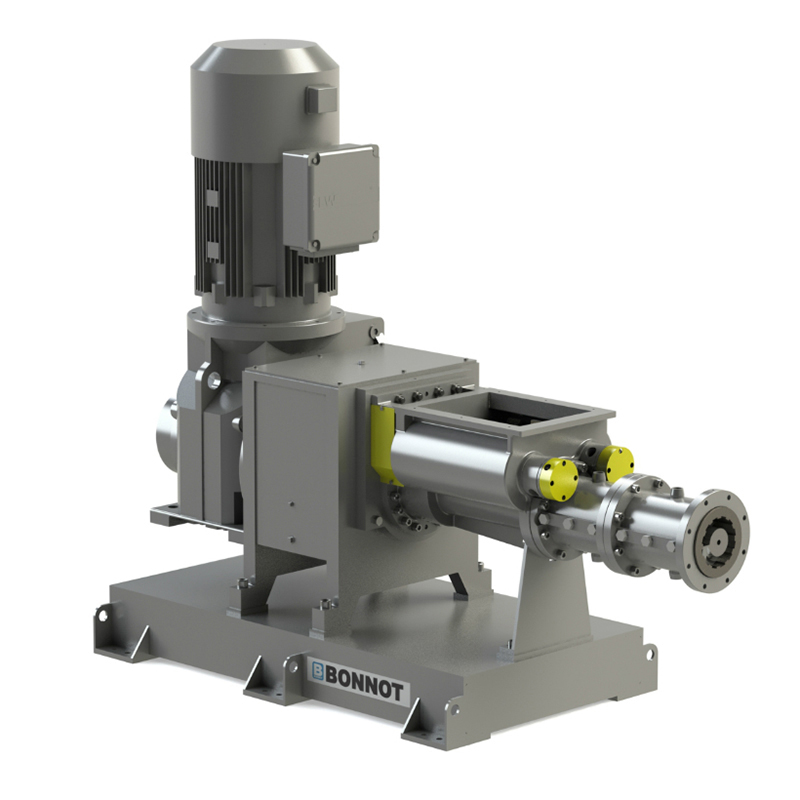
Chemical Catalyst Extruders
We are the number 1 catalyst extruder manufacturer in the world.
The Bonnot Catalyst Extruders are the industry standard for catalyst processing.
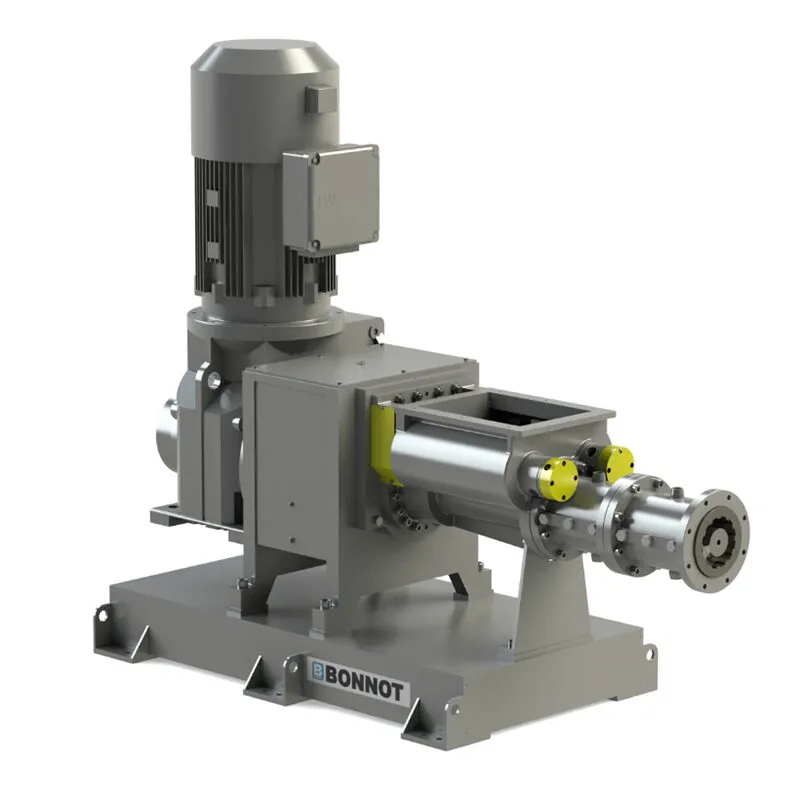
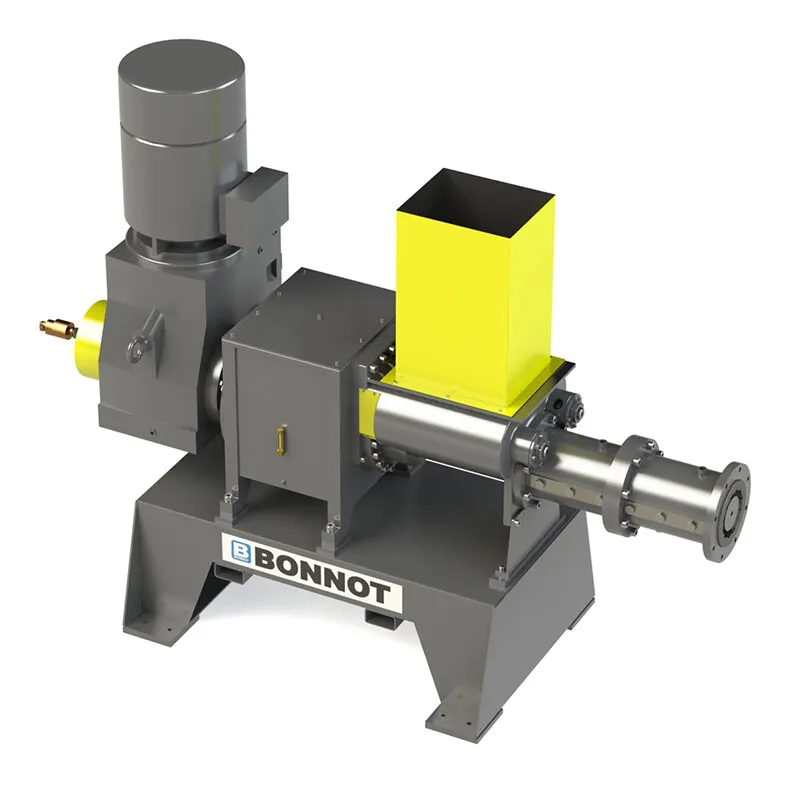
Every part of the design is optimally configured for processing abrasive catalyst materials. Materials of construction are chosen to last, and engineering enhancements make wearing parts quick and easy to replace. Our Twin Packer design aids material ingestion by reducing bridging in the feed hopper. When properly maintained, our catalyst extruders will run for decades.
Chemical catalysts are typically used for creating chemical reactions in oil refining and other processes.
PRODUCT INFORMATION
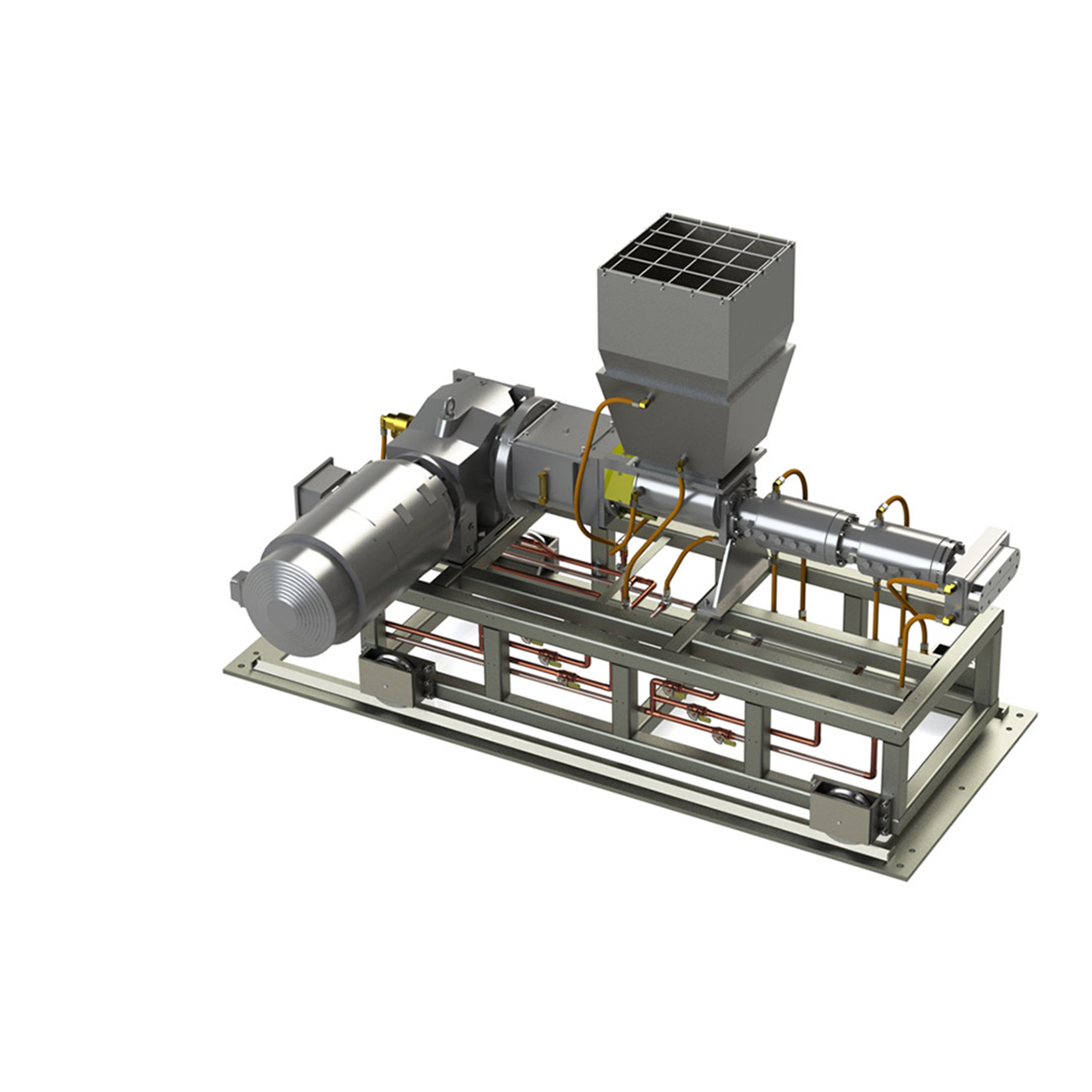
Bonnot Catalyst Extruders are purpose-engineered single-screw machines for the continuous shaping of inorganic catalyst pastes into cylindrical, trilobe, quadrilobe, ring, and custom cross-section extrudates used as the physical bodies of heterogeneous catalysts in petroleum refining, petrochemical synthesis, environmental control, and specialty chemical manufacturing. The CT series spans five sizes from 1″ through 8″, covering laboratory catalyst development through full commercial production.
Catalyst paste extrusion imposes a uniquely demanding combination of requirements on the extruder: the paste must be advanced at precisely controlled shear rates to maintain rheological consistency without fracturing the binder matrix, the die geometry must hold dimensional tolerances that directly control packed-bed void fraction in the reactor, and the wear surfaces must resist the abrasion of alumina, silica, and zeolite pastes over production campaigns that may last several days without interruption. Bonnot addresses each of these requirements through screw geometry developed specifically for catalyst pastes, precision-machined and hardened die inserts, and metallurgical specifications matched to the chemistry of the specific paste system.
ADVANTAGES AT A GLANCE
-
01
Precision Die Geometry for Bed Performance
Bonnot works with partners JMP Industries to produce trilobe, quadrilobe, ring, and custom die geometries to hold extrudate diameter tolerances that ensure consistent void fraction and pressure drop across packed catalyst beds. The importance of this dimensional precision is directly commercial: a catalyst body that is even slightly oversize reduces bed void fraction below the design value, increasing pressure drop across the reactor and potentially limiting throughput; one that is undersize reduces the number of active catalyst pellets per cubic metre of bed volume, reducing conversion efficiency. Either deviation from specification affects reactor operating economics in ways that are directly traceable to the extruder's dimensional performance.
-
02
Predictable Scale-Up Across Five Frame Sizes
The five-frame CT series - from CT 1 laboratory through CT 8 production - maintains full mechanical similarity between sizes, meaning that paste rheology and die geometry optimised on the CT 1 laboratory machine transfer directly to the CT 8 production extruder without re-qualifying the formulation. For catalyst manufacturers developing new body geometries or binder systems, this predictable scale-up eliminates the iterative pilot campaigns at intermediate machine sizes that would otherwise be required before production tooling is commissioned.
-
03
Metallurgy Matched to Paste Chemistry
Metallurgy matched to paste chemistry is a practical requirement rather than a design refinement. Bonnot specifies metallurgy at the point of quotation based on the paste chemistry, avoiding the field-discovered corrosion failures that occur when standard carbon steel equipment is specified for corrosive catalyst systems.
INDUSTRIES AND MATERIALS SERVED
Extruder Design Features
-
01
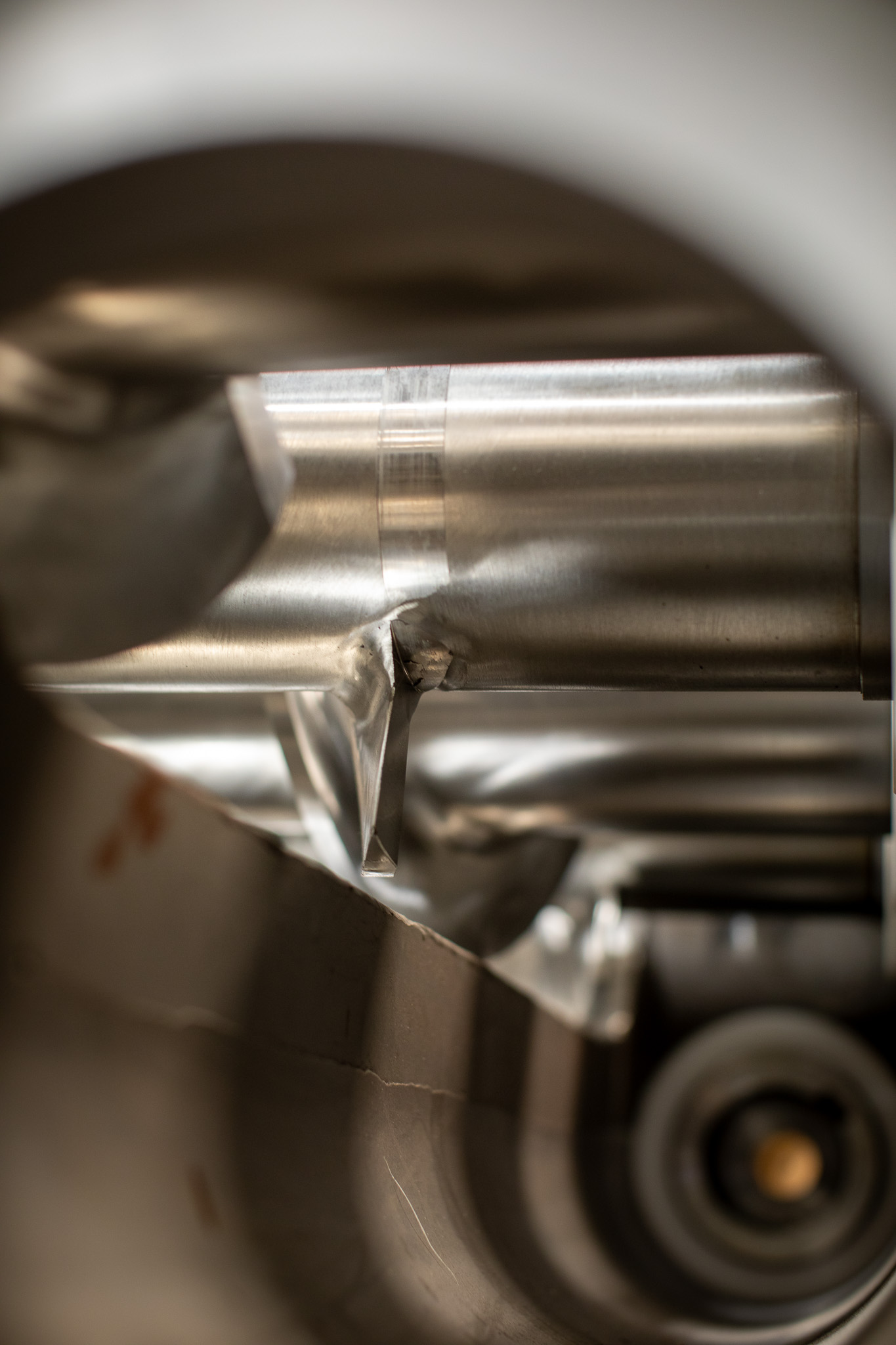
Extrude high surface area shapes such as cylinders, hollow tubes, trilobe, quadlobe & more
-
02
Designed for continuous production with proven wear resistant replacable contact components
-
03
Customized and configured for the specific application
-
04
Auger rebuild program and barrel liner replacement service
-
05
Temperature control features
-
06
50+ years of proven operation with worldwide install base
Specifications
Extruder Standard Specifications
CT 1 Series
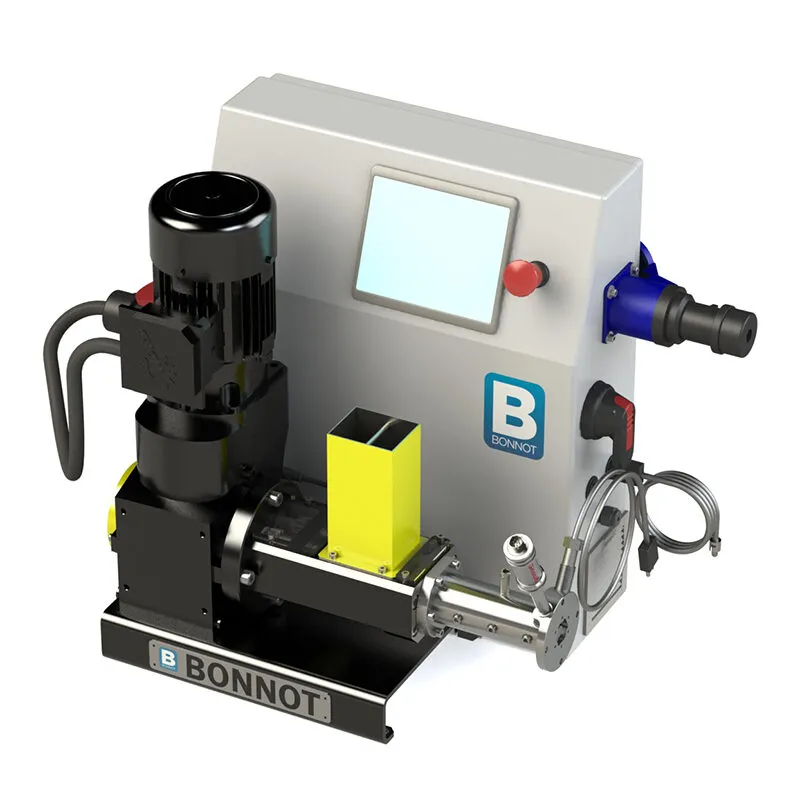
- Output (lbs/hour)
- 5-15
- Approximate Layout (L x H x W)
- 21" x 22" x 16"
- Hopper Opening
- 3” x 2.4”
- HP
- 0.5
- Contact Components
- Proprietary Stainless Steel
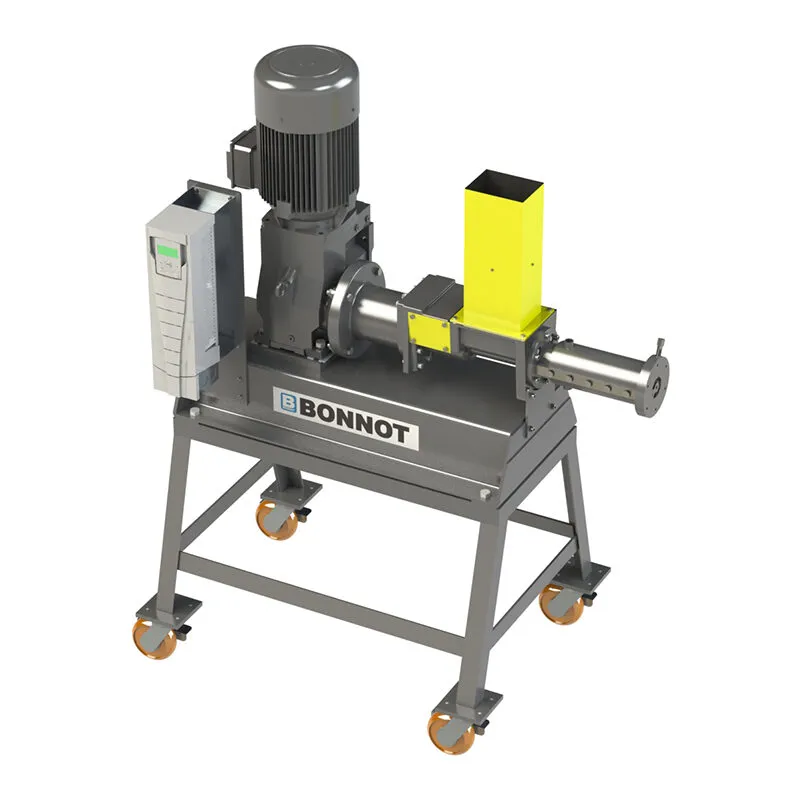
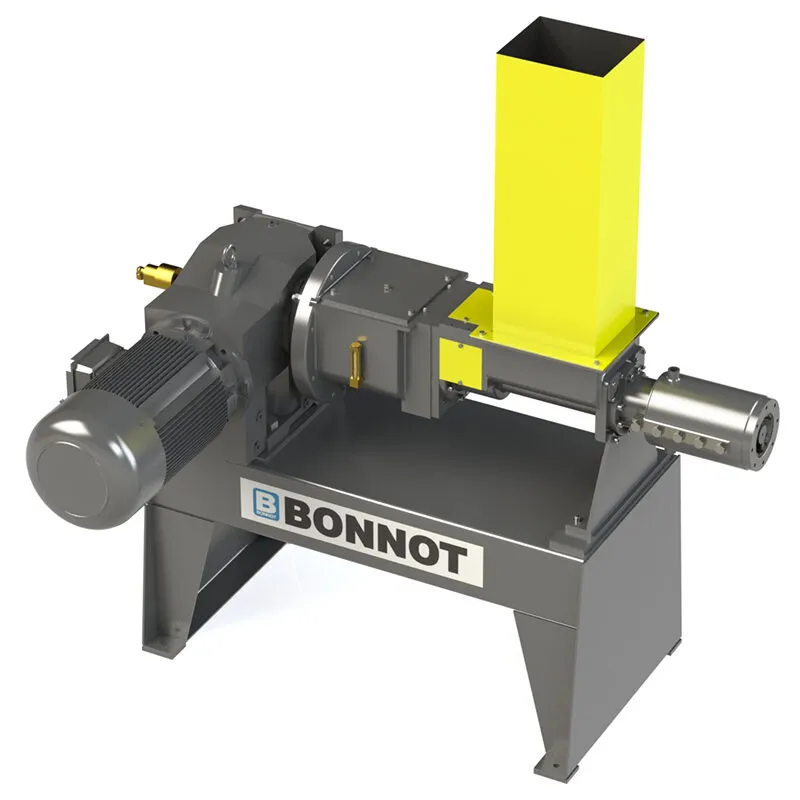
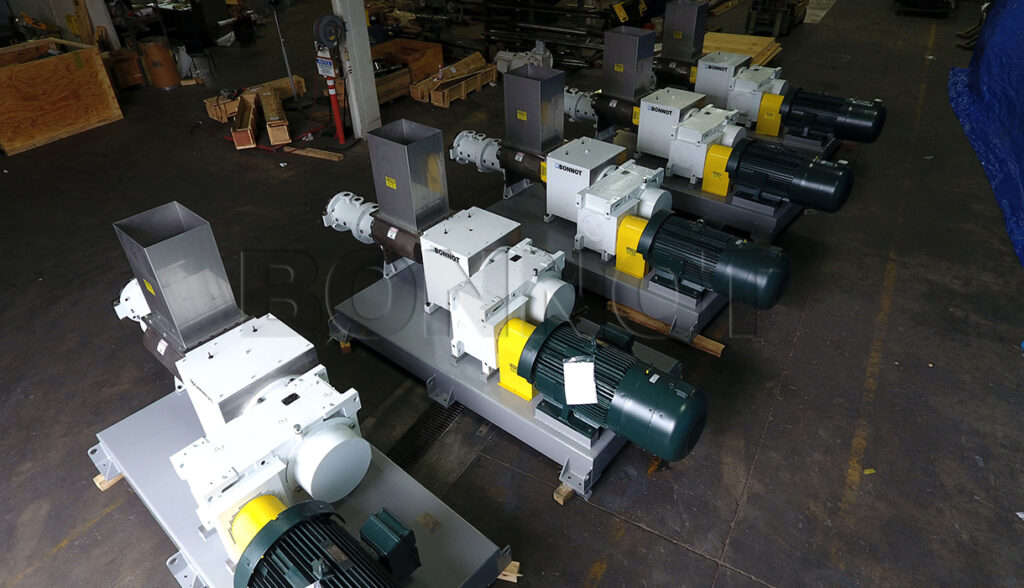
Capable of handling large orders
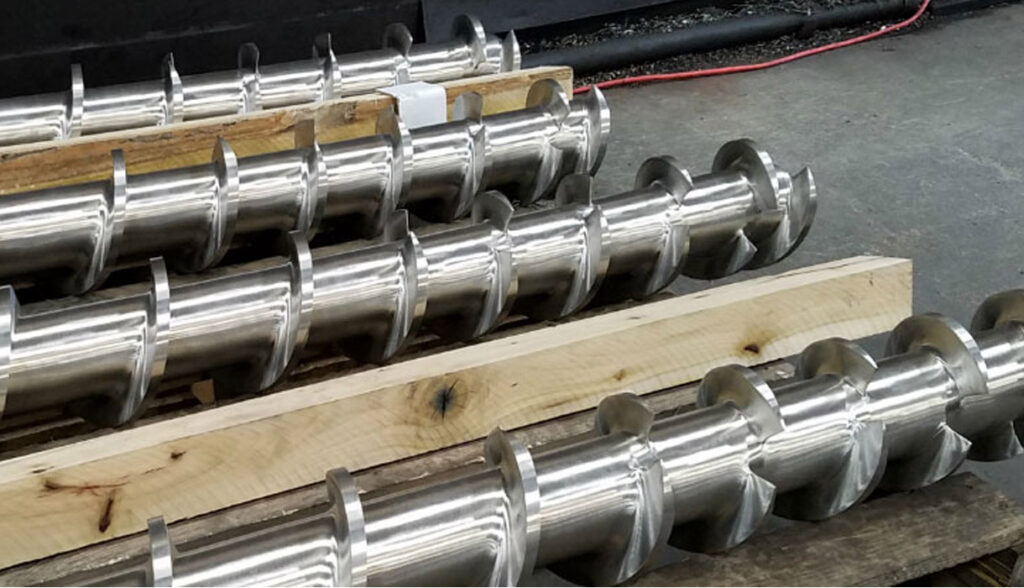
Here are five CT 8 Series extruders ready for shipment to a major catalyst manufacturer.
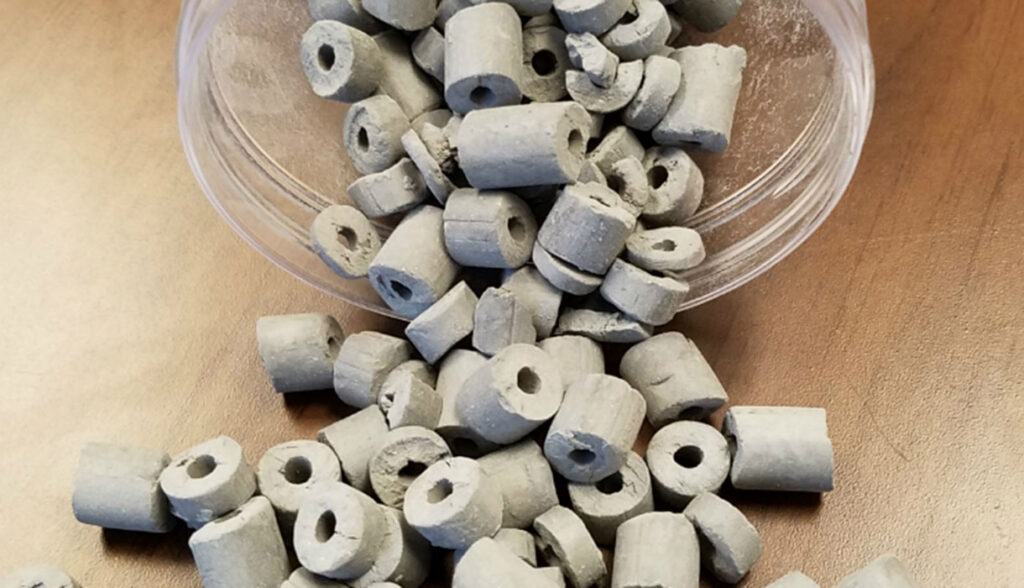
Hollow Profiles
The Bonnot Company Catalyst Extruders are able to form hollow tubes and many other high surface area profiles.
Auger Rebuild
We offer an auger rebuild program. Send worn down augers to us and we’re rebuild them quickly and cost ettectively.
Extruding Chemical Catalyst
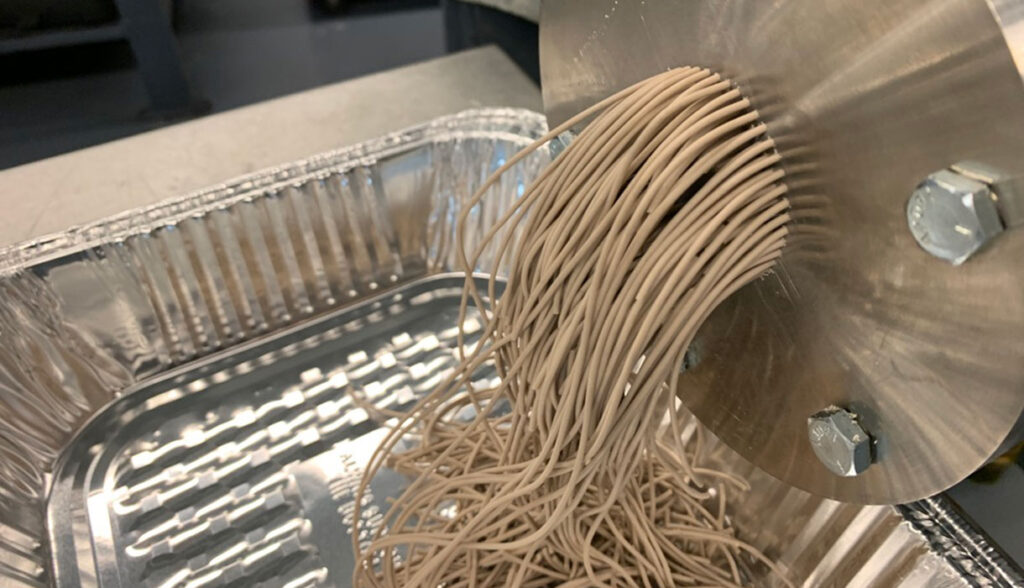
Here is a photo of a catalyst trial in the Bonnot test room. Here, we are simply proving feasibility with the formulation.

Catalyst Processing Test
In our test room we’re able to run numerous trials to determine formulation, output rates, die configuration, monitoring key factors including moisture & tensile strength.
Catalyst Samples
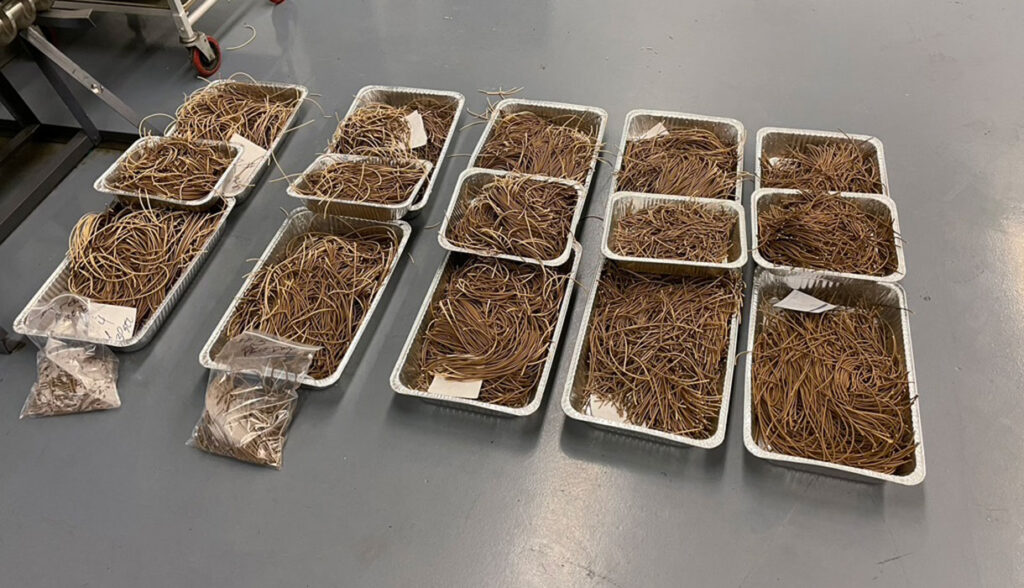
After a trial, we carefully package up samples to send to the customer for their further evaluation.
Catalyst Samples
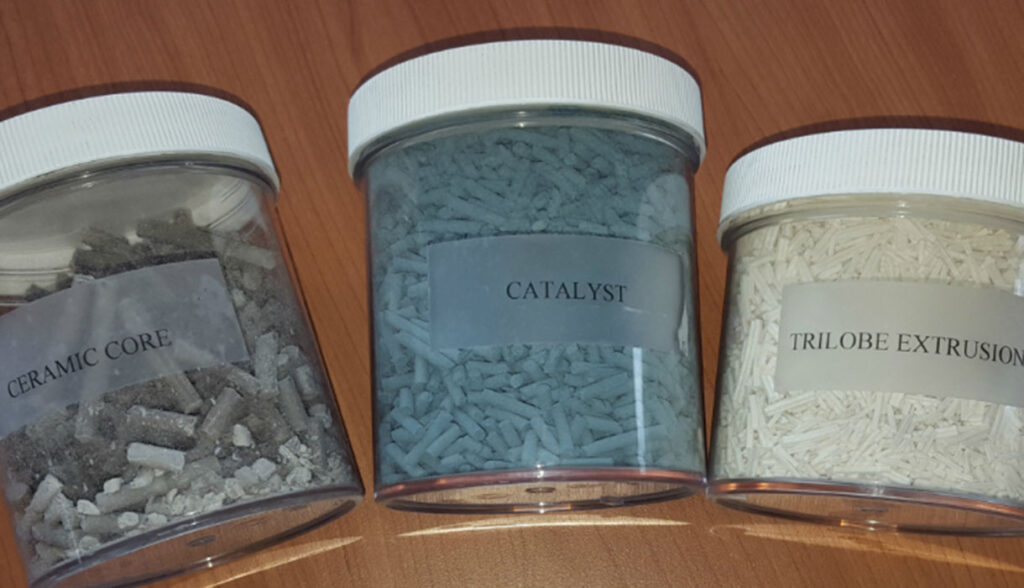
Here are some samples of catalysts we have formed.
FREE FEASIBILITY TESTING
WANT TO PROVE IT OUT?
The Bonnot test facility offers free feasibility trials across the full CT series — different frame sizes, wear protection, and full material testing.
-
EXPLORE THE CT SERIES
EARLY RESEARCH
EXPLORE THE CT SERIES
Not sure which size fits your pellet output? We'll help you match your material to the right configuration.
-
SCHEDULE A CONSULTATION
TECHNICAL EVALUATION
BOOK A TECHNICAL CONSULTATION
Discuss binder distribution, pellet strength, and throughput directly with a Bonnot process engineer.
-
READY TO TRIAL
BOOK A FREE TRIAL RUN
Bring your paste to our facility. We'll run a trial, measure key parameters, and send you samples.