Home » How to Choose a Single-Screw Extruder Manufacturer
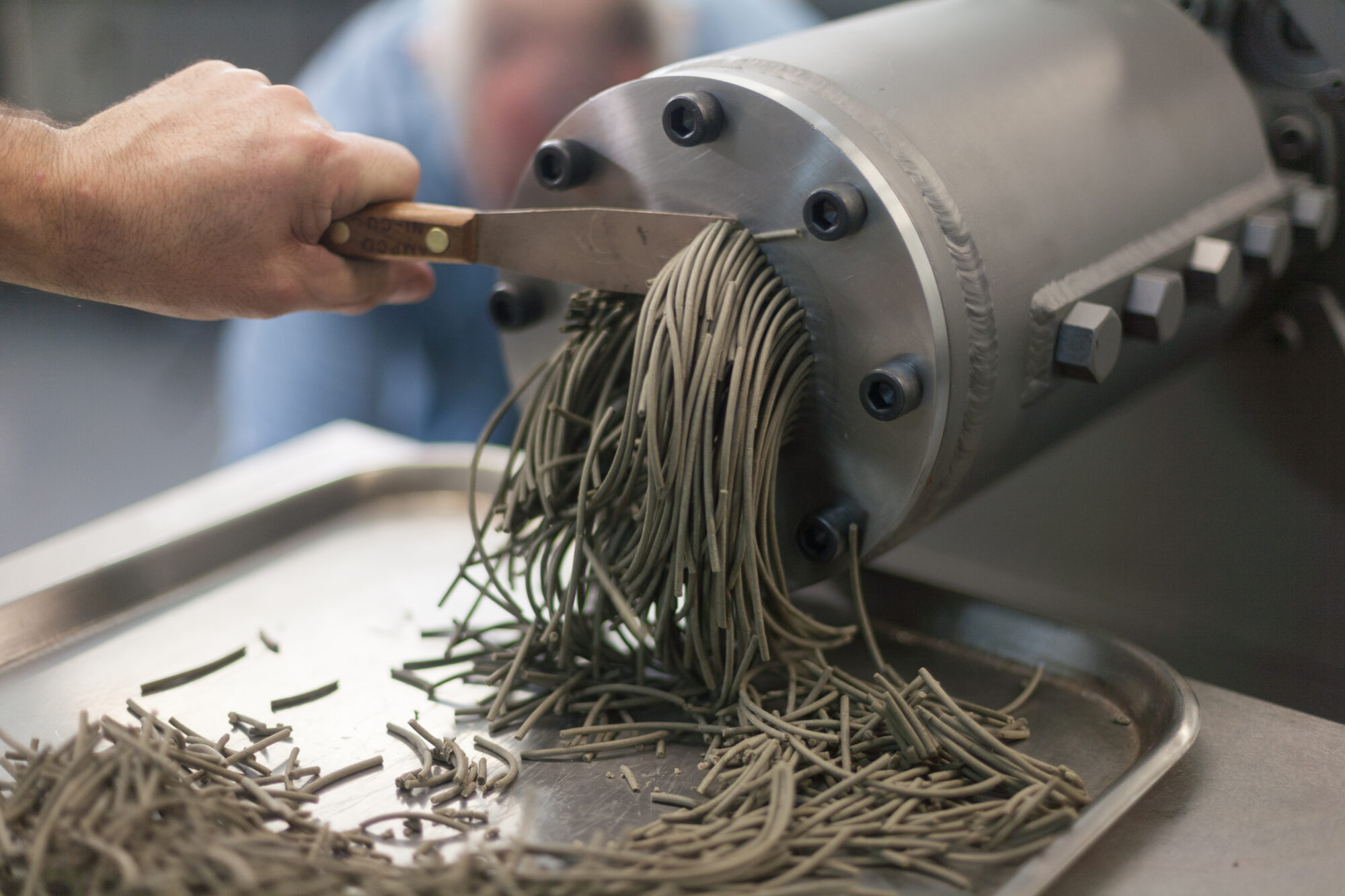
A hand uses a spatula to cut grayish strands of material emerging from a large industrial single screw extruder onto a metal tray, showcasing the precision and efficiency typical of leading single screw extruder manufacturers.

How to Choose a Single-Screw Extruder Manufacturer

Specifying a custom single-screw extruder is a 20-to-30-year decision disguised as a purchase order.

The vendor you pick determines who answers the phone during a startup problem, whether replacement screws still exist for your machine in 2045, and whether the engineer designing your screw geometry has actually run material like yours. This guide covers how to evaluate single-screw extruder manufacturers — by material domain, testing capability, parts continuity, and builder scale — so the machine you buy matches the process you run, now and into the future.

WHAT SHOULD YOU LOOK FOR IN A SINGLE-SCREW EXTRUDER VENDOR?

Evaluate a single-screw extruder manufacturer on four things: whether they process your material class, whether you can trial your actual feedstock before buying, how long they will support parts and service, and whether their machine line scale matches your accountability needs. Match Select the vendor to your for material and service expectations rather than to the longest spec sheet. No single builder manufacturer is the best fit for every application, and the widest most extensive catalog is rarely the right signal indicator.
HOW DOES SCREW GEOMETRY AFFECT WHAT YOUR EXTRUDER CAN PROCESS?

  1. SCREW GEOMETRY GOVERNS PROCESS OUTCOME

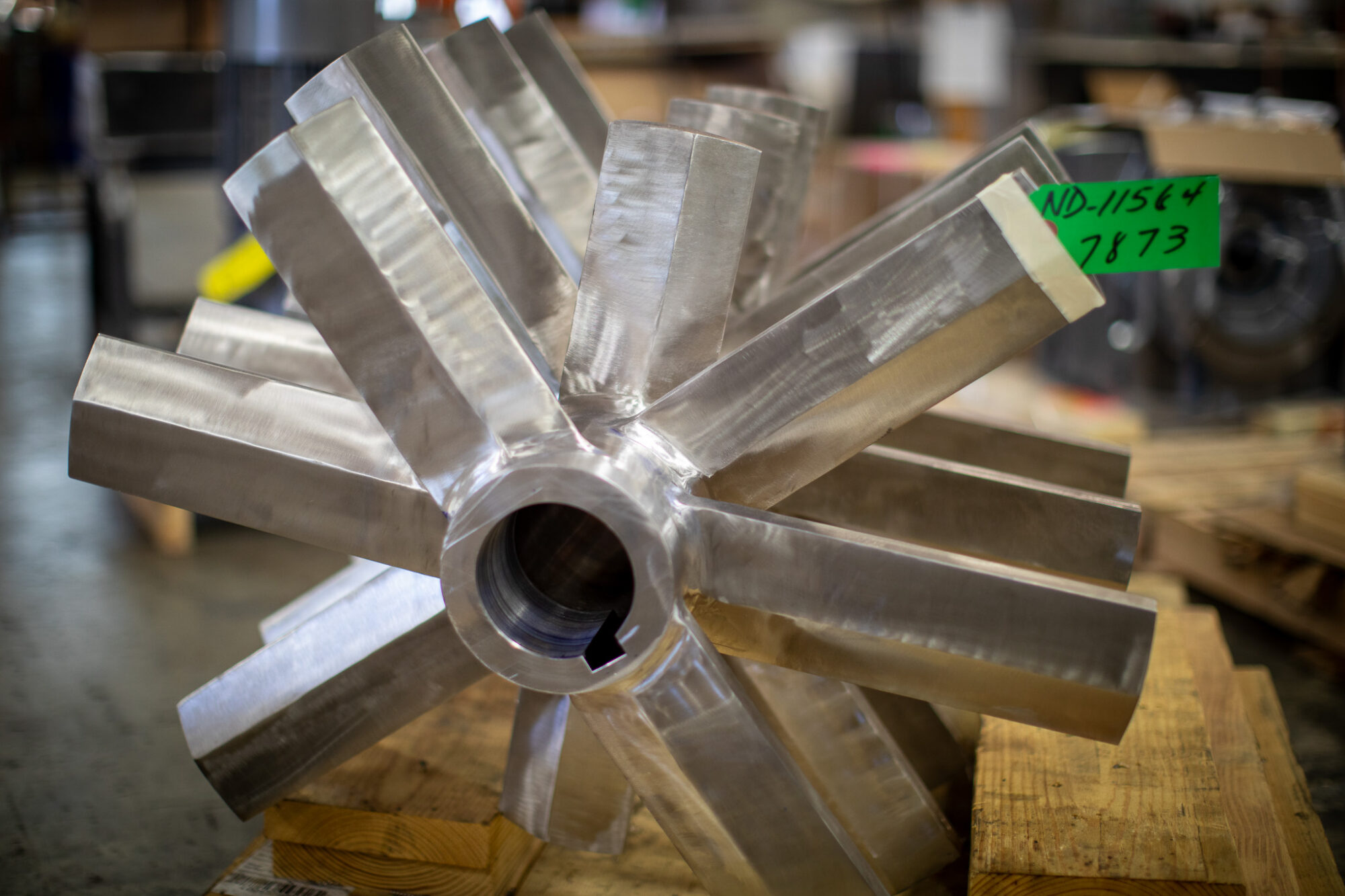
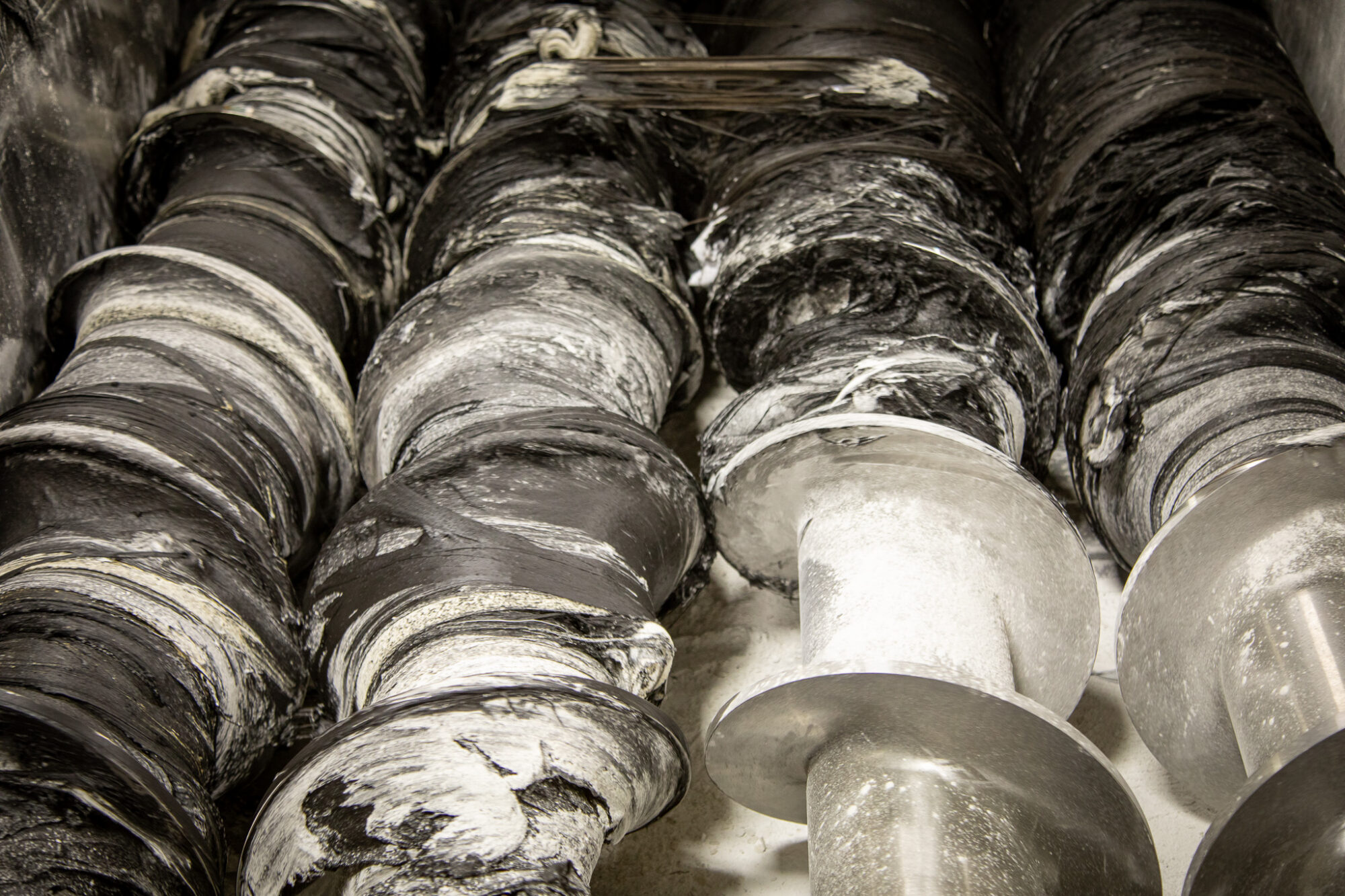
    A single-screw extruder conveys material down a heated or cooled barrel and forces it through a shaped die under pressure. The screw does the work, and its geometry — flight pitch, compression ratio, metering-zone depth, and length to diameter (L/D) ratio — governs shear history, residence time, and pressure development. Get that geometry wrong for your material and you get may experience shear degradation, inconsistent output, or a machine that won’t pack and pressurize a stiff paste develop sufficient pressure to create the desired profile.

  2. WHAT "CUSTOM" ACTUALLY MEANS IN EXTRUSION

    This is why “custom” means something specific in extrusion a design that meets your processing objectives. A vendor that starts from a catalog and swaps a motor is not doing the same work as one that designs the screw around your material’s rheology and validates it on your actual feedstock before cutting steel. The right question is not “how many models do you offer?” It is “will you design the screw for my material, and prove it before I commit?”

Which extruder manufacturer fits which material?

Material domain narrows the field faster than anything else. Extruder builders tend to specialize, and that specialization matters more than brand. Catalyst, activated carbon, rubber, food and pet food, ceramics, and specialty pastes point toward material-specialist single-screw shops — this is The Bonnot Company’s core competency. Thermoplastics, silicone, and medical tubing point toward plastics- and medical-focused builders such as US Extruders manufacturers. High-volume film, sheet, wire and cable, and pipe and profile point toward global plastics platforms like Davis-Standard, which operate at industrial scale across many product lines. If your material is a high-viscosity catalyst paste or a tacky rubber bale, a plastics film OEM is the wrong tool choice— and a good specialist will tell you so. The reverse is equally true: a catalyst-and-rubber specialist is not who you call for a high-volume blown-film line.

Which extruder manufacturer fits which material?

MATERIAL DOMAIN NARROWS THE FIELD FASTER THAN ANYTHING ELSE. 

Extruder builders tend to specialize, and that specialization matters more than brand. Catalyst, activated carbon, rubber, food and pet food, ceramics, and specialty pastes point toward material-specialist single-screw shops — this is The Bonnot Company’s core competency. Thermoplastics, silicone, and medical tubing point toward plastics- and medical-focused builders such as US Extruders manufacturers. High-volume film, sheet, wire and cable, and pipe and profile point toward global plastics platforms like Davis-Standard, which operate at industrial scale across many product lines.

If your material is a high-viscosity catalyst paste or a tacky rubber bale, a plastics film OEM is the wrong tool choice— and a good specialist will tell you so. The reverse is equally true: a catalyst-and-rubber specialist is not who you call for a high-volume blown-film line.

Why does material testing matter before you buy an extruder?

Because throughput on a single-screw extruder depends on the material, the die, speed and the screw configuration — not on a catalog table. The only reliable way to specify a machine is to run your actual feedstock material on representative equipment and measure screw speed, head pressure, melt-temperature profile, and output quality. A machine specified from a table instead of measured results is a machine specified on hope. Insist on a trial with your real material before signing. Bonnot runs feasibility trials in its Akron test facility on production-representative, scalable equipment, and the final machine specification comes is derived from that measured data. Several other reputable builders run labs as well; use whichever vendor’s facility you are evaluating.
Learn more

Does a bigger extruder manufacturer mean a better one?

Not necessarily — it depends on what you are optimizing for. A large global platform gives you a broad service network, wide product-line coverage, and industrial-scale capacity, which are genuine advantages for high-volume polymer processing. A specialist shop gives you direct engineering attention and single-facility accountability: the person who picks up the phone about your eight-year-old machine may have helped build it.

Bonnot is a privately owned specialist manufacturer of roughly 30 people in Akron, Ohio, with sales offices in the UK and China. Design, machining, assembly, and testing happen under one roof, and every extruder is test-run before it ships. For a one-off zeolite catalyst extruder, a rubber bale feeder, or a dewatering machine for a specialty processor, that focus and continuity matter more than a global footprint. For a high-volume film or cable line, a large platform may serve you better. Different problems, different tools.

Should you consider a twin-screw extruder instead?
Sometimes. Single-screw extruders develop high pressure efficiently and suit materials that need consistent plug flow — rubber profiles, ceramic pastes, food doughs, and formulations where shear history must should be minimized. Twin-screw extruders provide more intensive, controllable mixing, which makes them preferable for compounding filled polymers, reactive extrusion, and applications requiring dispersive or distributive blending. If your process is fundamentally about mixing rather than pressurizing and forming, a twin-screw machine may be the right answer over any a single-screw shop — which is exactly what a feasibility trial is meant to establish confirm.

A four-question checklist for choosing an extruder vendor

  1. Does the vendor process your material class?

    Catalyst, carbon, food dough, and rubber bale point one direction; thermoplastics, film, and medical tubing point another. Getting this these wrong wastes everyone’s time.

  2. Can you test your actual material before buying?

    Require a trial with your feedstock and ask to attend and/or see the measured data behind the machine spec.

  3. What does the parts-and-service tail look like?

    Confirm that maintenance, screws, liners, and barrels and all parts for this machine will still exist well into its service life.

  4. Does the builder’s scale match your accountability needs?

    Decide whether you would rather have Compare the benefits of a global service network or against the engineer who designed your screw in person or on the phone during startup.

The practical next step

For most buyers, the highest-value move is the same regardless of which vendors are on your shortlist: run your actual material on the equipment before you sign anything. A specification built from measured throughput and product quality is worth more than any brochure claim. If your material is a catalyst, carbon, rubber, food, or specialty paste — and you want a machine you can still get parts for decades from now — Bonnot’s combination of single-screw specialization, 130-plus years of continuous operation, legacy-parts support, and test-before-you-buy engineering capability is built for exactly that. Tell Bonnot engineering about your material, throughput target, and output geometry, and the response will be a preliminary recommendation and, where warranted, a proposal for a process trial.
Get in touch

Free feasibility testing

Want to prove it out?

The Bonnot test facility offers free feasibility trials across the full CT series — different extruder designs, screw geometries, forming dies, temperature control options, and full material testing.

  • Early Research

    Explore the CT Series

    Not sure which machine fits your process? We'll help you map your paste chemistry to the right configuration.

    Download the guide
  • Technical Evaluation

    Book a Technical Consultation

    Discuss screw geometry, die selection, metallurgy, and scale-up directly with a Bonnot process engineer.

  • Ready to Trial

    Book a Free Trial Run

    Bring your paste formulation to our facility. We'll run a trial, measure key parameters, and send you samples.